Author Maureen Dunne is a recipient of the “Live Long and
Prosper” Tribute Award presented by the Nimoy-Knight Foundation
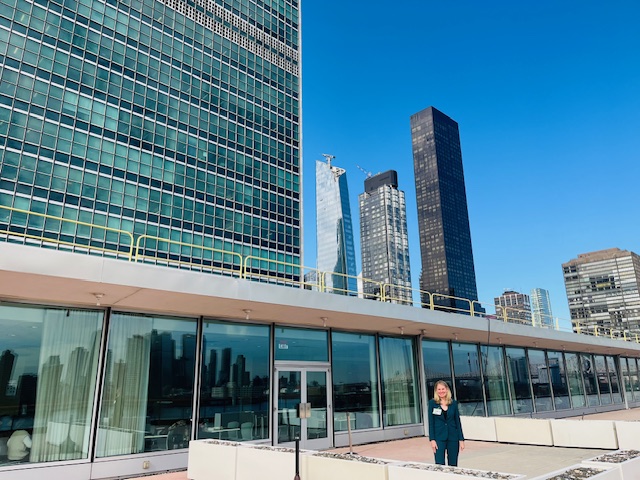
Neurodiversity expert and author, Maureen Dunne (The Neurodiversity Edge) talks neuro-inclusion – at the Rotary Club-NY, at the UN, and at the Davos Neurodiversity Summit 2026
| “Perhaps there is a world that works better than the one you see around you each day. Not just better morally. Better practically. We are prisoners of an erroneous paradigm about neurodivergence. The paradigm shift is underway.. – ”Maureen Dunne, author,The Neurodiversity Edge and organizer of the Davos Neurodiversity Summit, WEF |
by Patricia Lynne Duffy
I had the pleasure of meeting, in person, neurodiversity expert Maureen Dunne, author of the ground-breaking book, The Neurodiversity Edge, during her visit to New York City and to the United Nations campus. It was a week before Thanksgiving, and Dunne had traveled from her native Chicago to New York for meetings and a presentation at the Rotary Club-NY-UN branch.
Maureen Dunne’s day in New York started at 8 am, as she entered the sun-filled conference room, where the Rotary Club-UN breakfast meetings take place on the United Nations campus, just opposite the UN headquarters building. The author strode to the front of the room, exuding a quiet, determined confidence to carry out her mission, i.e., spotlighting one of our most under-utilized human resources: neurodivergent individuals, who are often under-appreciated and under-employed—despite often having the skills and aptitudes sorely needed in today’s workforce.
In her talk, Dunne discussed the spectrum of neurotypes in the human population—and how certain ones, such as those on the autism spectrum or with attention deficit disorder, had traditionally been pathologized. But, as she pointed out, evidence has come to light showing each of these neurotypes, despite challenges, is often gifted with superior ability to focus attention, perceive systemic patterns, and generally, employ “outside the box” thinking that can lead to innovation.
Dunne spoke about her work as a neurodiversity expert, Dunne is called upon to advise workplaces about their teams—and encourage them to recruit minority neurotypes as part of their team mix.
She emphasized that a workplace does itself no favors by hiring only people with majority neurotypes, often called “neurotypicals”. Ideally, work teams need to include a balance of cognitive styles to help get beyond persistent problems that can hold back product/service development and workplace culture.
In her talk, Dunne provided examples of renowned neurodivergent innovators such as Bill Gates, founder of Microsoft and Richard Branson, founder of Virgin Airlines. Both have publicly discussed their “minority neurotypes”: Gates is on the autism spectrum and Branson has both attention deficit disorder (ADD) and dyslexia. Gates has described the “gifts” associated with his condition (Autism 1), such as the ability to “super-focus” and recognize systemic patterns that others may miss; Branson has credited his ADD with allowing his quick mind to find unexpected links among ideas and systems, which helped him create a new concept in running an airline.
Despite minority neurotypes having such “gifts”, Dunne explained that many are not hired because recruiters perceive them as too “different” in their communication and work styles and fear they will not “fit into” a conventional work environment.
Dunne finds that this over-emphasis on “culture fit” deprives organizations of the benefits that minority neurotypes can often contribute.
The audience of Rotary Club members—professional people of varying ages and professions, including United Nations staff, lawyers, doctors, artists, and entrepreneurs –were by turns curious, fascinated, and moved by Dunne’s talk. Following the presentation, Dunne led a lively Q&A and discussion, which included audience members describing neurodivergent friends or family members: a son with ADD, a colleague with dyslexia. In a couple of cases, they talked of their own forms of neurodivergence (ADD, synesthesia).
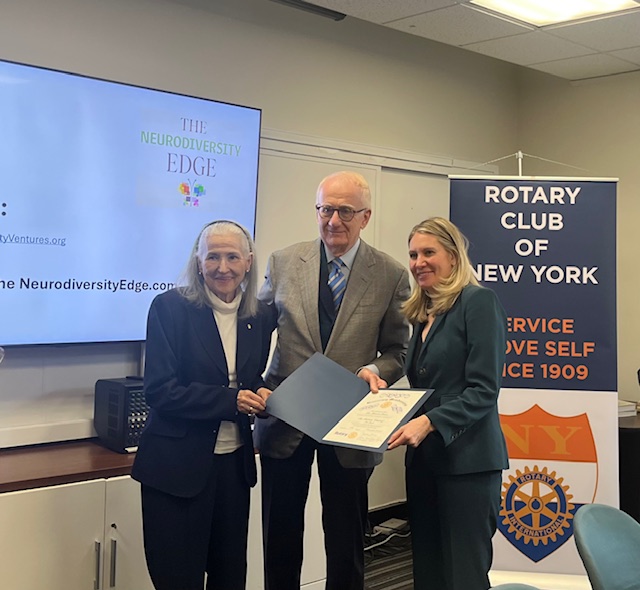
Dunne explains the “new paradigm” for regarding neurodiversity in her straightforward, midwestern style. At the same time, listeners sense an edge of something unique, something that says she knows whereof she speaks – from personal experience.
Her own form of neurodivergence is “concept synesthesia”, which allows her to visualize ideas as abstract shapes and “move them around” to better understand their possible connections and potential outcomes.
Following the Rotary discussion, Dunne and I crossed the street to the UN headquarters building, where we would talk about Davos Neurodiversity Summit 2026. As Dunne and I stopped for lunch at the UN staff cafeteria, we both remarked on the diverse dishes offered, to suit the variety of cultural tastes of those who work in this international community.
Sitting amidst an international mix of fellow diners, we remarked on the richness of cultural variety—and how we are now learning more about the richness of neuro-variety.
Last year, Dunne’s “Davos Neurodiversity Summit” initiative brought together neurodivergent people from across the globe to participate in WEF meetings and discussion groups (both in person and virtually).
The Summit generated a lot of enthusiasm and ideas, which will continue to evolve at Davos 2026.
Plans include intergenerational sharing of experiences; participation of students from high schools and community colleges; distribution of “sensory-friendly kits” for those especially vulnerable to the noise and over-stimulation participants can experience at this packed to the gills conference! The kits will include noise-canceling earbuds, stress-relieving thumb stones, sunglasses. Sensory friendly walks will also be offered as relief from the stress of what can be an over-crowded, over-stimulating Davos conference environment.
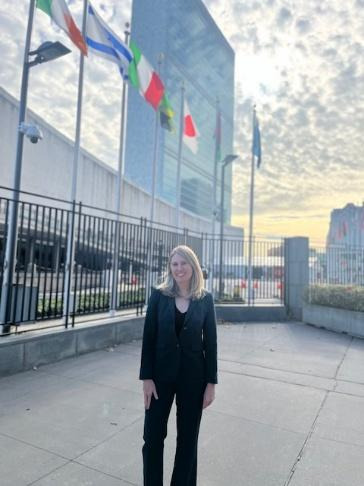
Our last stop was a visit to the United Nations General Assembly Chamber, the symbol of equality among all the peoples of the world. We took a photo in front of the world-recognized UNGA icon at the front of the Chamber. The icon shows the map of the world as viewed from the North Pole — where no country—and no people—has the central focus—but all have their equal place in the grand scheme that is our world.
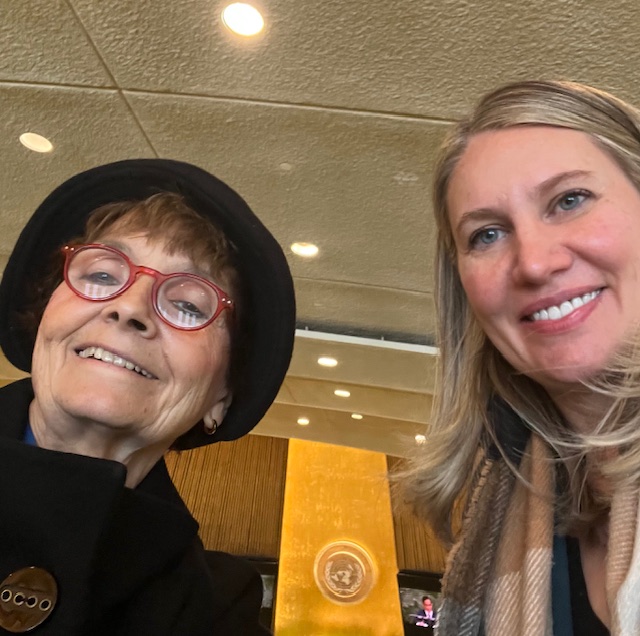
As we left the UN grounds that day, and I said good-bye to Maureen Dunne, who was on her way to a meeting, where she would advocate for its neurodivergent students—
Reflecting on our exchange, I recalled these words of hers: “Perhaps there is a world that works better than the one you see around you each day. Not just better morally. Better practically. We are prisoners of an erroneous paradigm about neurodivergence. The paradigm shift is underway. Ultimately, we are likely talking about life outcomes involving billions of people.”
For more information
about the Neurodiversity Summit 2026
https://www.davosneurodiversitysummit.com
about author, researcher, neurodiversity advocate Maureen Dunne:
about The Neurodiversity Edge by Maureen Dunne
https://www.theneurodiversityedge.org
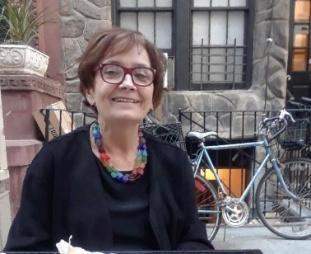
Patricia Lynne Duffy is the author of the now classic, Blue Cats and Chartreuse Kittens:
how synesthetes color their worlds, the first book by a synesthete about synesthesia. An
audio version of the book with research updates, music by synesthete-composers, and
an “Afterword” was recently released, available from Audible . Duffy also contributed a
chapter, “Synesthesia and Literature” to the Oxford Handbook of Synesthesia. See her
website, https://www.bluecatsandchartreusekittens.com/