
By Patricia Lynne Duffy
Novels are such a popular storytelling medium today that it’s hard to believe the form only emerged in the 18th century. Before that, epic poems dominated literature, recounting grand adventures and heroic feats performed by royalty, gods, and goddesses. These stories were meant to be recited aloud and performed rather than privately read in the pages of a book—or on a Kindle.
The novel revolutionized storytelling by focusing on everyday people—not just their outer lives but also their inner thoughts and struggles. One of the earliest and most popular novels was Pamela by Samuel Richardson, which followed a housemaid navigating the power imbalance between herself and her employer, “the master.”
Over the past two centuries, literature has increasingly centered socially marginalized characters, bringing diverse voices to the forefront. In recent decades, as awareness of neurodiversity has grown, novels have introduced protagonists with unique neurological profiles—characters who are synesthetes, on the autism spectrum, or have ADHD or dyslexia. Once pathologized, these differences are now often recognized as valid ways of experiencing the world, sometimes even accompanied by great strengths such as heightened concentration, creativity, and innovative thinking.
Here are some unforgettable novels featuring “neurospicy” main characters:
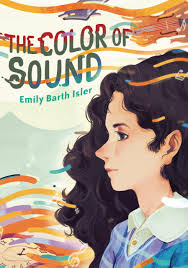
The Color of Sound by Emily Barth Isler (2024)
Rosie, a 12-year-old musical prodigy, experiences synesthesia: she hears music in color and feels it as texture. Her extraordinary ability to recall any piece of music perfectly is a gift her mother urges her to keep secret:
“Just don’t tell anyone, OK? … Some things other people can’t understand, so we don’t share them.”
Determined to rebel, Rosie decides to spend the summer without playing music. But at her grandparents’ home in rural Connecticut, a series of mysterious encounters—including meetings with her own mother at age 12, thanks to a wrinkle in the space-time continuum—transform her world. This is a wonderfully engaging coming-of-age story.
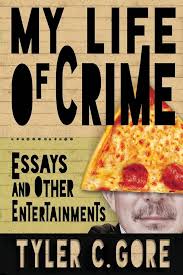
My Life of Crime and Other Entertainments by Tyler Gore (2022)
This hilarious collection of short fiction includes Appendix, a novella where digression is elevated to an art form. The narrator, who has ADHD, warns readers from the start:
“So I forget—did I tell you I have attention deficit disorder? Confirmed by several therapists… you get the point: this thing is digressive. Lots of detours. Time to buckle up, roll down the windows, crank up the tunes. Oh, come on. Get back in the car. Please? We have a long way to go… We’re taking the life-affirming scenic route.”
New York City itself is described as the ultimate ADHD environment, with distractions at every turn. This book is a must-read for fans of smart, observant, and mischievously humorous writing.
The Maid by Nita Prose (2022)
A global bestseller (over 2.2 million copies sold), The Maid follows Molly, a hotel maid who loves her job: cleaning and restoring order to unkempt rooms. But Molly struggles with social cues, making her an outsider among her coworkers:
“The truth is, I often have trouble with social situations; it’s as though everyone is playing an elaborate game with complex rules they all know, but I’m playing for the first time. I make etiquette mistakes with alarming regularity, offend when I mean to compliment, misread body language, say the wrong thing at the wrong time. It’s only because of my gran that I know a smile doesn’t necessarily mean someone is happy. Sometimes people smile when they’re laughing at you…”
When Molly discovers a dead body in one of the rooms she cleans, suspicion falls on her. Alone in the world after the death of her beloved grandmother, Molly must rely on her inner resources—and a few unexpected allies—to clear her name. A compelling mystery with an unforgettable neurodivergent heroine.
Dreams of Laika by Timothy Layden (2019)
Set in a future where Earth is no longer habitable, this sci-fi novel explores a spaceship powered by music. Certain characters experience synesthesia, vividly perceiving sound as color:
“I closed my eyes and saw all of the sounds expanding out of me like amorphous forms: multi-colored beads of mercury floating through a vast emptiness.”
The book’s richly visual descriptions reflect the author’s own experience as a synesthete and painter, making for a mesmerizing read.
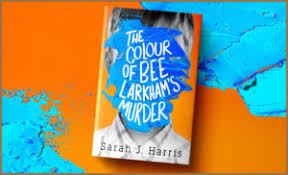
The Colour of Bee Larkham’s Murder by Sarah J. Harris (2018)
Jasper, a highly intelligent and observant boy on the autism spectrum, also has synesthesia and face blindness—he can’t recognize faces but sees people’s voices as colors. His father urges him to suppress his differences:
“Try to act normal.
Don’t flap your arms.
Don’t rock.
Don’t go on about your colors.”
When his neighbor is murdered, Jasper’s unique perception of the world may be the key to vindicating himself and solving the murder. This gripping novel also explores the complex relationship between Jasper and his neurotypical father.
Bitter in the Mouth by Monique Truong (2010)
Linda/Linh-Dao, a word-taste synesthete, is a double minority—an Asian-American adoptee growing up in an all-white Southern town and a neurominority with a sensory experience few can understand.
“When my teacher asked, “Linda, where did the English first settle in North Carolina?” the question would come to me as, “Lindamint, where did the Englishmaraschinocherry first Pepto-Bismol settle in North Carolinacanned peas?”
Many of the words I heard or had to say aloud brought with them a taste – unique, consistent, and most often unrelated to the meaning of the word that had sent the taste rolling into my mouth.”
This poignant novel by Monique Truong, winner of the Dos Passos Literary Prize, examines identity, belonging, and the hidden ways we experience the world.
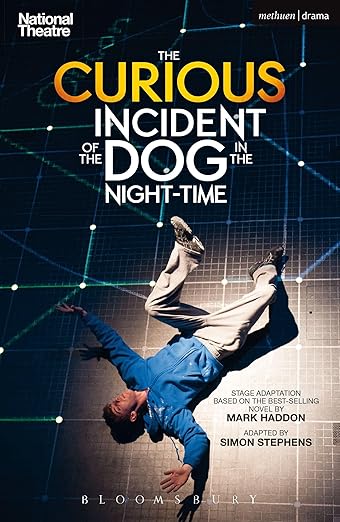
The Curious Incident of the Dog in the Night-Time by Mark Haddon (2004)
This bestselling novel (later adapted into a Tony-winning Broadway play) follows Christopher, a teenager on the autism spectrum who loves math and idolizes Sherlock Holmes. When a neighbor’s dog is mysteriously killed, Christopher’s meticulous attention to detail drives him to uncover the truth—challenging his understanding of the world along the way.
Painting Ruby Tuesday by Jane Yardley (2003)
Many readers are already familiar with this now classic synesthete-story brought to us by an author Yardley, who is herself a synesthete, as well as a neuroscientist. The main character is 12-year-old Annie, a music-color synesthete. She feels misunderstood by all except for her beloved neighbor and piano-teacher, Mrs. Clitheroe, also a music-color synesthete. The synesthetes have an exhilarating time playing musical compositions together:
“What colors do you hear there?”
“It sounds green to me,” I said…
“Ok, let’s see if I can modulate it to bring you some others.”
Her Broadway Boogie-Woogie slid bluely into the relative minor key, “Now?” she asked.
“Bluer!” I laughed back at her. It’s going blue!”
“Magic!”, cried Mrs. Clitheroe, her hands dancing on the keyboard.
When Mrs. Clitheroe is murdered, Annie is devastated—and her out of the box ways of thinking may just help to solve the murder.
Stay tuned next time for a Q&A with one of the above authors—and a more complete list of novels with neurospicy characters!
Patricia Lynne Duffy is the author of the now classic, Blue Cats and Chartreuse Kittens:
how synesthetes color their worlds, the first book by a synesthete about synesthesia. An
audio version of the book with research updates, music by synesthete-composers, and
an “Afterword” is recently out. Available from Audible She also contributed a chapter,
“Synesthesia and Literature” to the Oxford Handbook of Synesthesia. See her
website, bluecats.info
