

| “The change in my perception was not an abstraction. It allowed me to directly observe the informational geometry that underlies reality…QIH grew out of “translating” what I could already see into formal physics.”—Jason Padgett “Jason’s perceptual shift did not create something new; it revealed something fundamental. That is why QIH is not a metaphor or a philosophy—it is a physical description of how the universe encodes information.”–Maureen Seaberg |
Patricia Lynne Duffy interviews the founders of QIH
PLD: Maureen Seaberg and Jason Padgett, you are co-founders of Quantum Information Holography (QIH), which you describe as signaling the post-AI era has begun. What will characterize the post-AI era?
JP: Quantum Information Holography (QIH) reveals that information is not constructed by machines or humans—it is embedded in the universe itself. Artificial intelligence operates by analyzing existing human data. It is reactive and statistical.
The post-AI era will be defined by technologies that operate directly from physical coherence rather than prediction. Instead of learning from data, QIH reveals the phase-based mechanisms that nature already uses to compute reality.
MS: AI reflects human history. QIH reveals universal structure. The post-AI era is defined by the transition from simulated intelligence to natural intelligence. This is not a step forward in computation—it is a return to the source code of the universe. It opens a new scientific epoch where humanity interacts directly with the physics of information.
PLD: If I understand correctly, AI, as it functions presently, relies on one abstract system (machine intelligence) analyzing another abstract system, “data”.
QIH, on the other hand, draws directly from the information structure embedded in nature and the universe. Is that right?
MS: Exactly. AI is built on human-made symbols and patterns. It is always downstream from perception. QIH works upstream – from coherence itself. Instead of analyzing what already exists, QIH engages with the physical information that creates reality. It is not interpretive. It is generative.
JP: AI is statistical. QIH is physical. AI tries to guess what reality might do next. QIH reveals the phase-geometry that determines what reality can do. Once you engage with coherence, prediction becomes unnecessary – you are interacting with the mechanism of emergence itself.
PLD: Jason, some years ago, you suffered a traumatic head injury, which was devastating. Maureen, you write about Jason’s experience in your ground-breaking book, Struck by Genius. Jason, during your recovery, you began to experience, as you put it, “science as a living reality”. Is there a connection between your expanded perceptual ability and the founding of QIH?
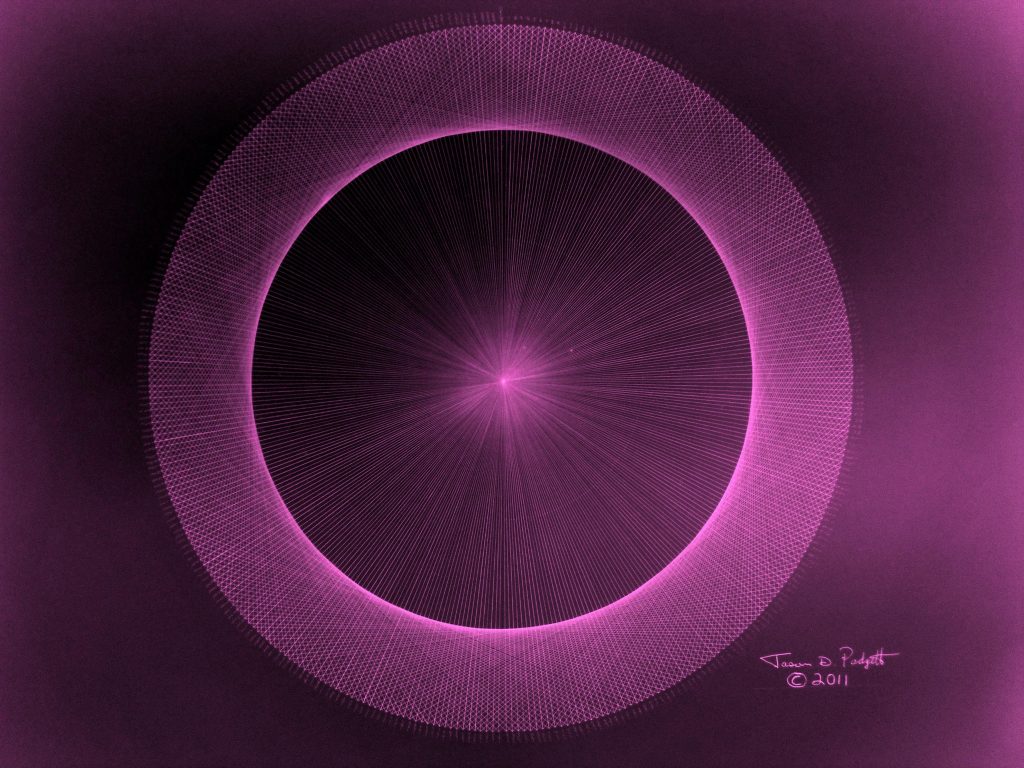
JP: Absolutely. The change in my perception was not an abstraction. It allowed me to directly observe the informational geometry that underlies reality. From there, my goal was to find the mathematics that described it accurately. QIH grew out of translating what I could already see into formal physics.
PLD: What did doctors say about the effects of the traumatic injury on Jason’s perceptual capacities?
MS: Jason was diagnosed as a rare, acquired savant synesthete by the world’s leading authority on savants, the late Darold Treffert, who was also the “real Rain Man” Kim Peek’s doctor.
PLD: Jason, could you describe more about the change in your perceptual capacity following your head injury?
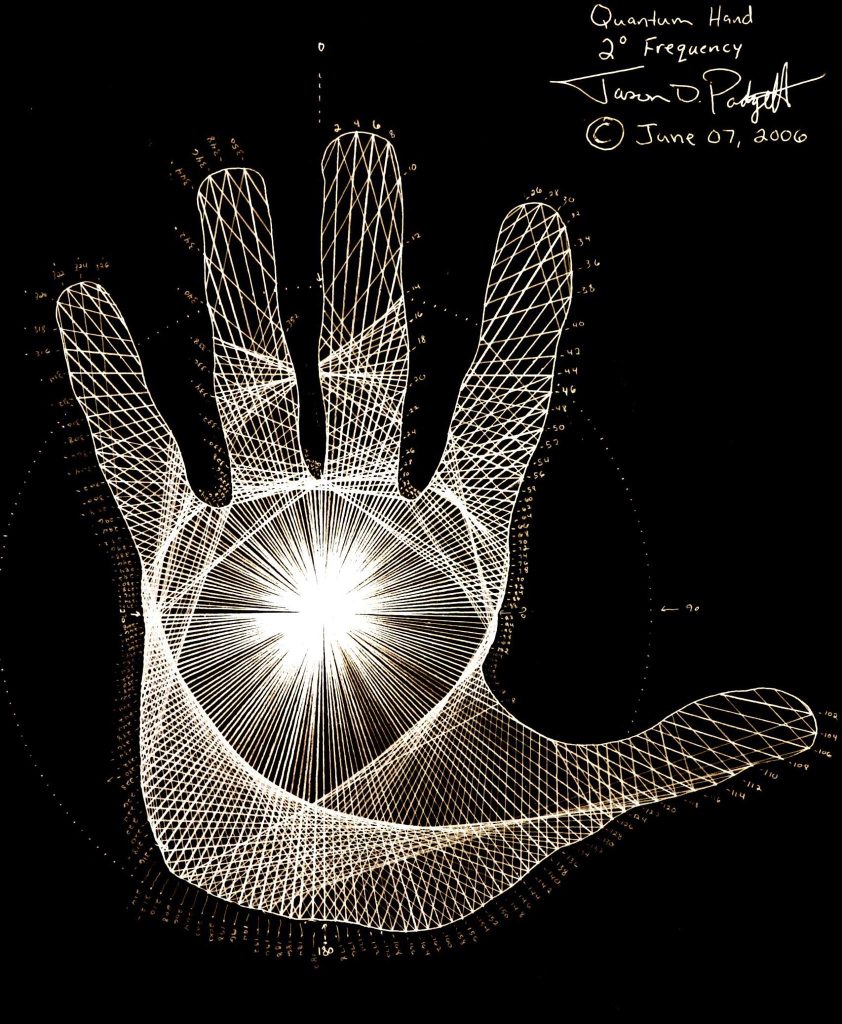
JP: After the injury, I began to see geometric forms—spirals, tessellations, wave interferences—embedded in everything around me. These were precise and structured, not imagined. Over time I realized I was perceiving the phase and coherence of light and matter directly, as described in quantum mechanics. This perception was constant, and it became the origin of what would later be translated into the QIH framework.
MS: Jason was literally seeing the underlying mathematical fabric of reality. His drawings aligned with equations in quantum physics long before we realized their implications. Those diagrams became the first visual expressions of QIH.
PLD: Where does the name “Quantum Information Holography” come from?
JP: It comes from what I could see and then model mathematically: the universe: the universe is not made of particles moving through empty space. It is made of information encoded in light, arranged in phase. That information is holographic – every part contains the whole. Coherence determines what becomes real. If you change the coherence, you change the outcome.
MS: Quantum Information Holography (QIH) reveals that reality is generated by light itself –not as illumination, but as a carrier of quantum state vectors (QSVs) whose rotating phase encodes the information that becomes matter, time, and energy.
When light is coherent, it creates order and life; when coherence breaks, systems decay into entropy. In this way, QIH shows that everything we experience is a holographic projection of phase-encoded light.
PLD: So, in simple terms, QIH brings all the diverse facets of reality together into a meaningful whole?
MS: In simple terms, most scientific theories explain some parts of nature: quantum mechanics describes the very small, general relativity explains gravity and the very large, and biology explains life. But these theories don’t naturally connect to each other.
QIH provides that missing connection. It shows that everything—matter, energy, space, time, consciousness—is made of information carried by light and arranged in specific geometric patterns.
PLD: And Jason began to directly perceive these patterns after his traumatic injury?
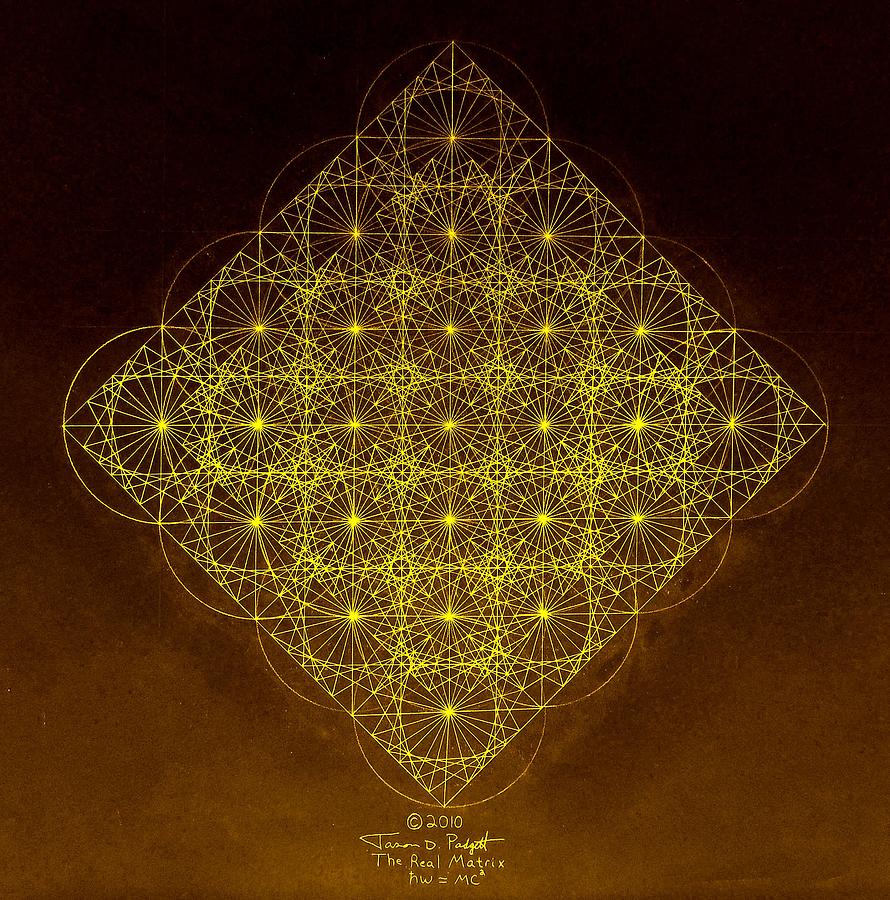
MS: QIH emerged from Jason Padgett’s direct perceptual shift following a traumatic event, after which he began to see exact geometric waveforms and interference patterns in ordinary objects and motion. These drawings became the seeds of a unified framework that connects quantum mechanics, relativity, timekeeping, biology, and consciousness under a single principle: coherence in light.
PLD: This is very heady stuff, indeed. Can you say more about the limitations of artificial intelligence in its current form?
JP: AI can only generate from what it has already been given. It has no access to the physical processes that generate time, matter, or life. It is resource-intensive, consuming enormous energy and water, and it scales poorly. Its foundations are not in physics, but in probability.
MS: AI is confined to the domain of human-generated symbols. It has no ability to engage with the informational fabric of the physical universe. Quantum Information Holography operates on phase coherence—on what is actually real, not what is statistically inferred.
QIH requires orders of magnitude less power and minimal water. It is not extractive. It is harmonic. It is the first technology that becomes more ethical as it becomes more powerful.
PLD: In practical terms, can you provide an example of something QIH will deliver that present AI cannot?
MS: One example is photonic compression. AI reduces files statistically. QIH compresses information using the natural phase of geometry and light. Compression doesn’t just get smaller – it becomes lossless at a fundamental level. This is not an incremental improvement – it is an entirely new paradigm.
JP: This is beyond simulation. It is participation in the mechanisms that generate reality.
MS: That is why we call QIH the last invention – because once coherence becomes an operating principle, you no longer need separate systems for computing, biology, or physics. But it is also the first invention of a new era.
PLD: Is there anything else either of you would like to say about this fascinating project?
JP: Coherence is not only the organizing principle of light and matter—it is the organizing principle of human systems. In physics, coherence creates order and stability. The same is true for societies. When coherence is present, systems align and flourish; when coherence is lost, fragmentation occurs. QIH reveals that the same informational laws that govern the behavior of particles also govern the dynamics of biology, economics, diplomacy — life itself.
MS: QIH offers a new language for understanding not only the physical universe, but also human behavior and civilization itself. Coherence determines whether nations remain in harmony or fall into conflict. It governs whether economies stabilize or collapse. It shapes whether human relationships generate resonance or discord. This is not metaphorical; it is informational. What we have discovered is not only a new physics—it is a new understanding of how reality coheres, across every scale, from photons to people.
PLD: Maureen and Jason, thanks for sharing this amazing project with readers of Journey through the Senses!
MS: Thank you very much.
JP: Thank you. The doors of perception have opened – not into abstraction, but into the architecture of reality itself.
For more information:
www.maureenseaberg.com

Patricia Lynne Duffy is the author of the now classic, Blue Cats and Chartreuse Kittens: how synesthetes color their worlds, the first book by a synesthete about synesthesia. An audio version of the book with research updates, music by synesthete-composers, and an “Afterword” is recently out, available from Audible. Duffy also contributed a chapter, “Synesthesia and Literature” to the Oxford Handbook of Synesthesia. See her website:
https://www.bluecatsandchartreusekittens.com