The Institute of Neurodiversity at the United Nations Summit of the Future
by Patricia Lynne Duffy
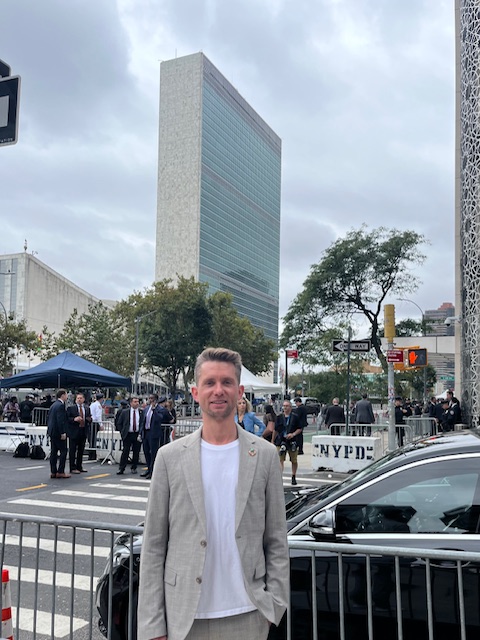
Silvan Ruthenberg of ION at the United Nations, NYC
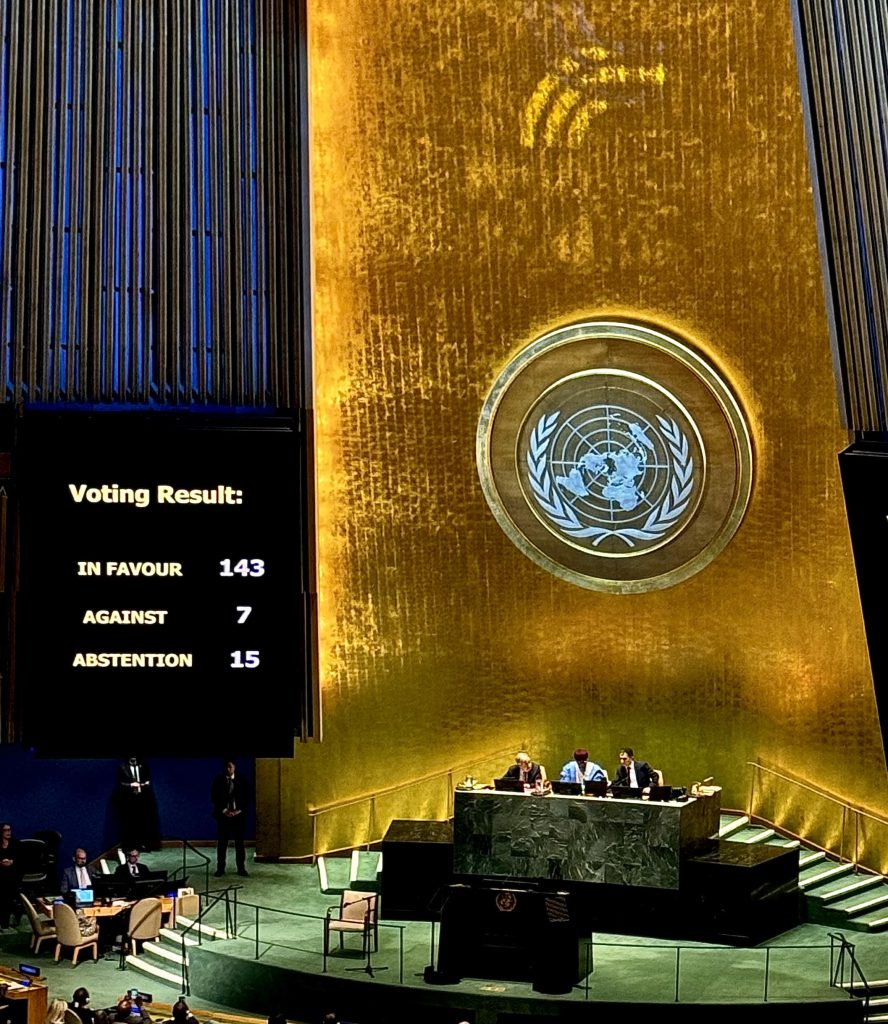
UN General Assembly vote on Summit of the Future Pact
| The recognition of neurominorities “is a human rights issue” -Silvan Ruthenberg, Institute of Neurodiversity |
Silvan Ruthenberg, Global Lead of the Institute of Neurodiversity (ION), arrived a day early at the United Nations Headquarters in New York City. He was scheduled to participate in the highly anticipated UN Summit of the Future 2024. It was his first visit to the iconic UN building, and he found himself in the General Assembly chamber on September 22, 2024, for a historic moment: the adoption of the Summit of the Future Pact by General Assembly delegates from 193 countries.
The Summit’s Pact addressed a broad range of pressing issues and future visions for humanity—encompassing peace and security, economic development, gender equality, digital access, artificial intelligence, and human rights. For Ruthenberg, the focus was human rights, specifically the rights of neurominorities, a topic of keen interest for both him and ION.
“I saw the vote results displayed on the General Assembly screen! It was my first time at the UN, and witnessing such a historic event was exhilarating,” he recalled. “I even snapped a photo of the vote count.”
Ruthenberg’s attendance at the Summit allowed him to engage with organizations that shared ION’s mission to promote the significance of recognizing neurominorities as part of the global conversation on human rights. “This is a human rights issue,” he emphasized.
The human rights framework of the UN Summit of the Future Pact emphasizes “social inclusion,” an essential component for the societal integration of individuals whose neurotypes differ from the mainstream “neuromajority.” For years, members of neurominorities—those identifying as being or having ADHD, autistic or autism, dyslexic or dyslexia and other neurological or cognitive differences –have questioned why their unique ways of thinking should be pathologized, as they traditionally have been.
While these individuals often face challenges, many also possess extraordinary abilities. History shows some of the world’s greatest innovators, like Einstein (thought to have been on the autism spectrum) and inventor Temple Grandin, to be members of neurominorities.
Of course, not every neurominority member falls into the category of genius, but their distinct cognitive processes often provide fresh perspectives on a variety of issues. As Ruthenberg pointed out, “Neurominorities make up 20 percent of the global population, present in every country. Their contributions are too valuable to be ignored.”
As a synesthete myself—a member of a neurominority—I have long been fascinated by non-standard ways of processing information. Having spent many years as a staff member at the United Nations, I understand how vital it is to create space for all types of people in the global community. Meeting Ruthenberg and hearing that the voices of neurominorities were finally being acknowledged at the UN was a personal milestone.
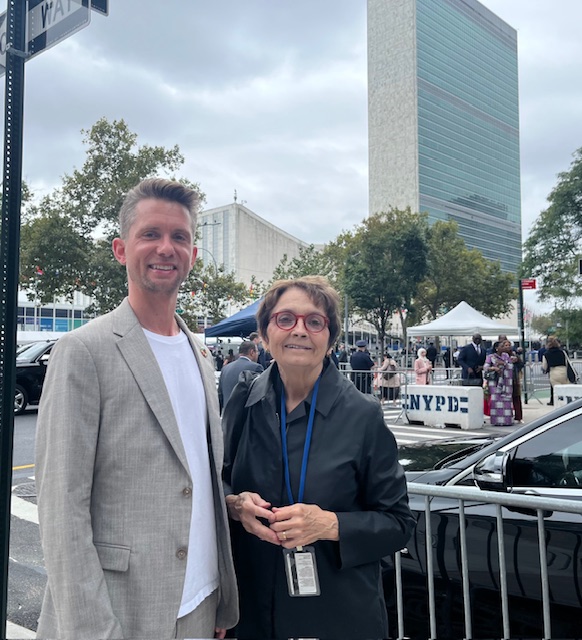
Silvan Ruthenberg and Patricia Lynne Duffy at the UN in NYC
We first met near the UN building, but soon sought refuge from the bustle of UNGA (United Nations General Assembly) week at Remi’s Flower and Coffee Café on Second Avenue. This cozy spot, a favorite among UN staffers, proved to be a fine place for our conversation, away from the noise that neither Ruthenberg nor I found conducive to our focused talk.
As we sipped our cappuccinos amidst the colorful plant life in the garden-like café, Ruthenberg shared insights into his own neurodiverse experiences. Ruthenberg is ADHD, dyspraxic and autistic and also experiences synesthesia. These traits, shared by other notable figures such as Bill Gates and Greta Thunberg, are often linked to exceptional problem-solving skills. “Hyperlexia”—the ability to read rapidly and absorb vast amounts of information—is one of Ruthenberg’s particular gifts. It has been an asset in his role as a strategist for various non-profit and corporate organizations. His linguistic talents, too, are striking; besides his native German, Ruthenberg speaks English, French, Spanish, and Brazilian Portuguese, making him a great fit for his role as ION Global Lead. Ruthenberg has worked with the organization for about two years, and IONs will soon celebrate its third anniversary. ION now has members in over 30 countries across five continents.
According to the ION website, the organization envisions a world where all neurotypes are “celebrated, embraced, and valued,” free from the constraints of limiting labels. In October, IONS will mark its third anniversary. The organization was the brainchild of Charlotte Valeur, a well-known UK executive, after she learned she was autistic. Her success, she realized, was not the norm for many neurominorities, who often find themselves marginalized in conventional workplaces.
Members of neurominorities can be perceived as not fitting into organizational culture. They sometimes report difficulty tolerating ambient noise, bright fluorescent lights, the need to make small talk, office politics. They are sometimes thought to speak too plainly and bluntly to fit into organizational culture.
Ruthenberg, as a linguist, is particularly mindful of the language used to describe neurominorities. “We at ION avoid the term ‘neurodivergent,’ as it implies deviation from an ideal norm,” he explained. “By using terms like ‘minority’ and ‘majority,’ we emphasize the importance of recognizing the specific needs of neurodiverse individuals, just as we do for other minority groups.”
As we chatted over our cappuccinos and matcha cookies, my eyes fell on a cluster of protea blossoms in a range of shapes and colors—a reflection, it seemed, of the diversity of minds that Ruthenberg was advocating for. He concluded, “The language we use forms perceptions and attitudes. Acknowledging different neurotypes is crucial to ensuring their inclusion in society. We need the full spectrum of neurotypes working together to tackle the challenges of the future.”
“The United Nations is one of the few global institutions with universal representation,” Ruthenberg added. Thanks to the work of Ruthenberg and the other innovators at IONS, let’s hope neurominorities will soon have a seat at the global table.
Find out more about ION by visiting: Institute of Neurodiversity ION – Home (ioneurodiversity.org) and become a global member.
United Nations Summit of the Future
https://www.un.org/en/summit-of-the-future
Patricia Lynne Duffy is the author of the now classic, Blue Cats and Chartreuse Kittens:
how synesthetes color their worlds, the first book by a synesthete about synesthesia. An
audio version of the book with research updates, music by synesthete-composers, and
an “Afterword” is recently out. Available from Audible She also contributed a chapter,
“Synesthesia and Literature” to the Oxford Handbook of Synesthesia. See her
website, bluecats.info . Duffy worked for many years at the United Nations.