Zoe Marinello-Kohn is a professional ballet dancer, actor, choreographer, artist and dance educator.
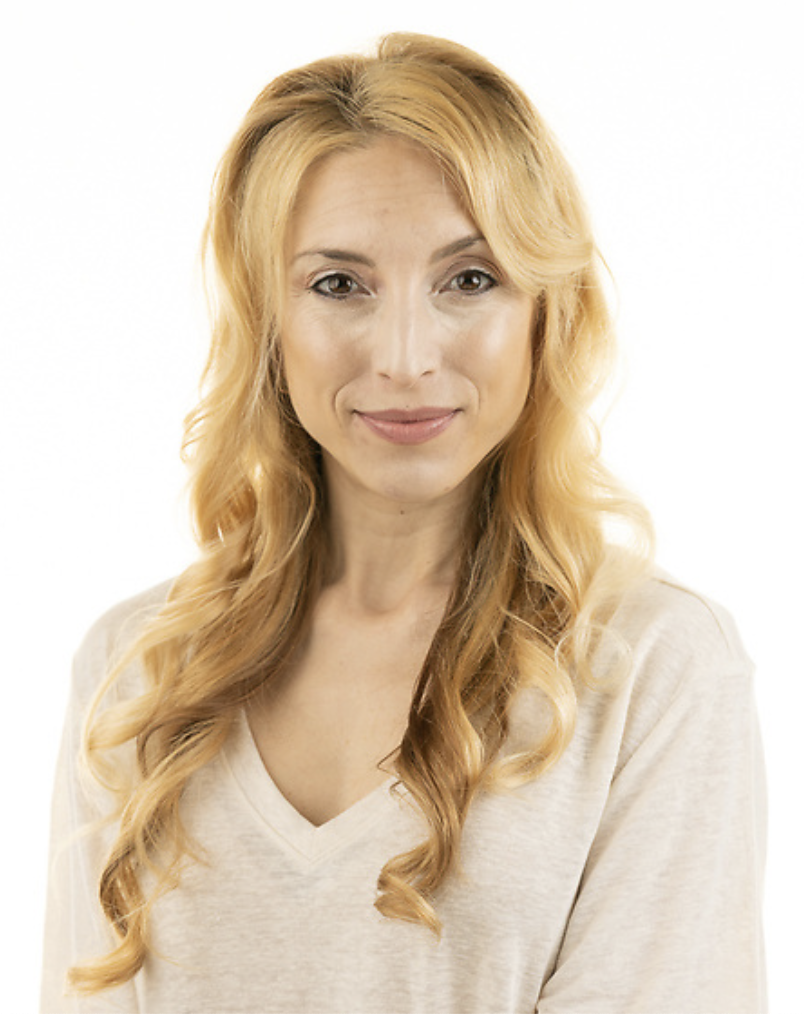
Zoe Marinello-Kohn
Photo Credit: Bob Walker
In June, the Aspen Institute held a three day conference dedicated to health as the opening part of the Aspen Ideas Festival. The festival brought together the greatest minds in medicine, science and the arts.
When I was offered a Fellowship to attend the Aspen Ideas: Health Festival earlier this year, I was overcome with gratitude. I felt a great sense of anticipation and I knew that it would be an important experience to be immersed in a world of connecting with others and sharing ideas.
I was very grateful to Journey Through the Senses for their support for my work over the years. From sponsoring my performances and artistic development to introducing me to other synesthete artists and journalists for collaboration and interviews, JTTS has been an integral part of my becoming the artist I am today. JTTS kindly provided a stipend to aid in my air travel to the Festival.
The Aspen Institute’s mission statement gives the best description of their scope of work, stating on the website, “The Aspen Institute is a global nonprofit organization committed to realizing a free, just, and equitable society. Founded in 1949, the Institute
drives change through dialogue, leadership, and action to help solve the most important challenges facing the United States and the world.”
When we arrived at our hotel in Aspen we were greeted with the most other worldly double rainbow we had ever seen. It was so pure. A distillation of colors I’d never even realized could be found in nature. It was as though the landscape itself was welcoming us into its haven. I didn’t really know what to expect for the next few days but if anything could have welcomed me into the unknown this rainbow reassured me that so far I was in the right place at the right time.
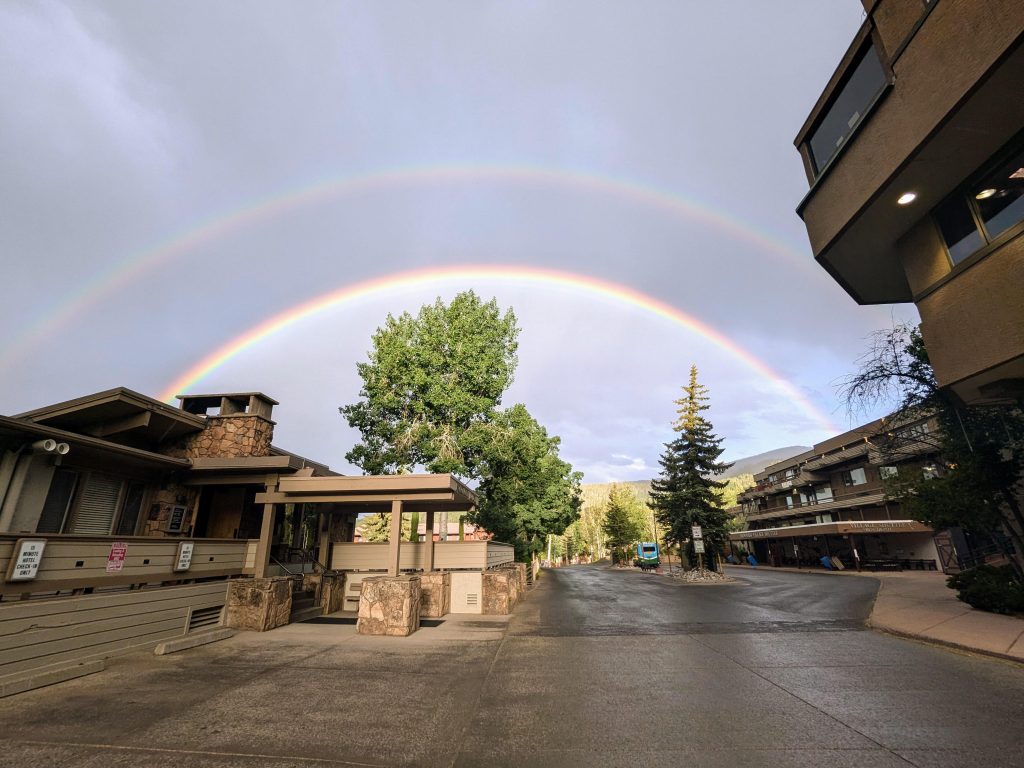
Photo credit: Aspen Institute
The next morning I boarded the shuttle to the Aspen Institute and in the first few moments of sitting down had phenomenal conversations with two other Fellows, both with such impressive backgrounds and careers I was fully drawn to their passion and enthusiasm. We arrived for registration and the first thing I noticed about the Aspen Institute campus was the way its perimeters seemed to fade into the mountains around us. The Festival opened through a large airy tent where registration took place and later many great conversations with other attendees and speakers.
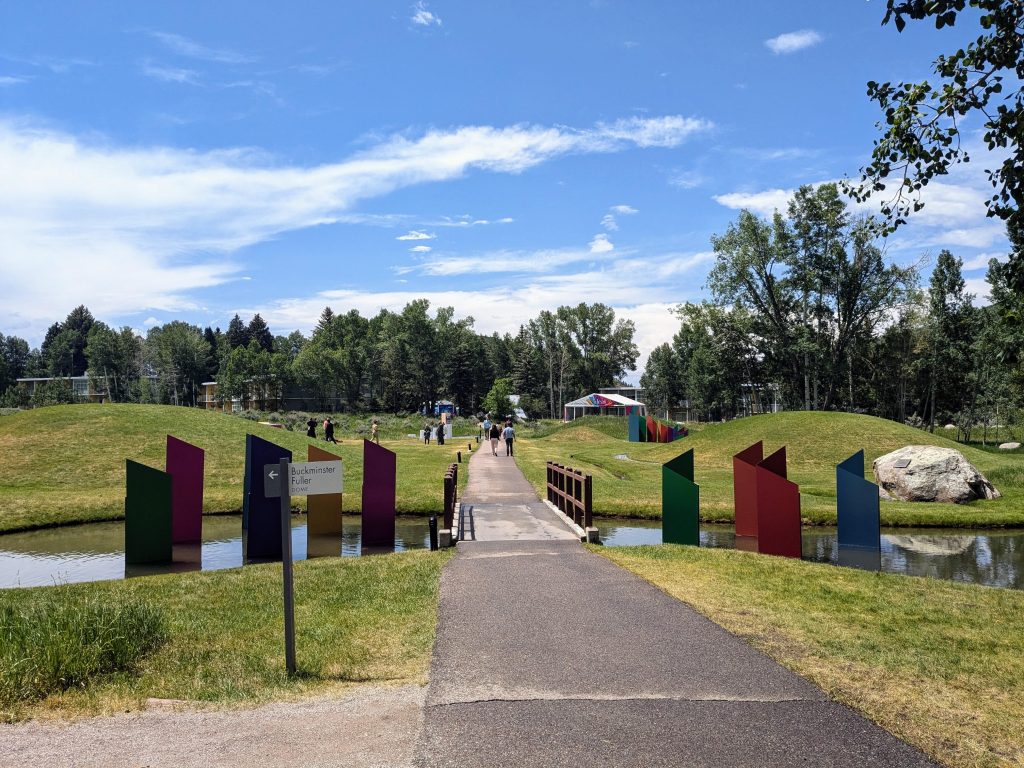
Photo credit: Aspen Institute
I had time after registration before my first session. While I waited I was very happy to meet Lauren Ciarallo who had been corresponding with me since my nomination and Katie Taylor who had nominated me for the Fellowship. I am incredibly grateful to have been offered the Fellowship. It not only gave me a perspective of my work from the outside and I felt seen as an artist from beyond the artistic community. It gave me a context for where my work fits into the bigger picture of society.
My passion is to bring to the conversation overlooked or undeclared aspects of humanity and circumstance through my artistic endeavors. Making a connection with other innovators, scientists, artists and entrepreneurs gave me clarity that art is a universal language. It has the capacity to become the through line of understanding between what could initially be deemed contradictory or incompatible.
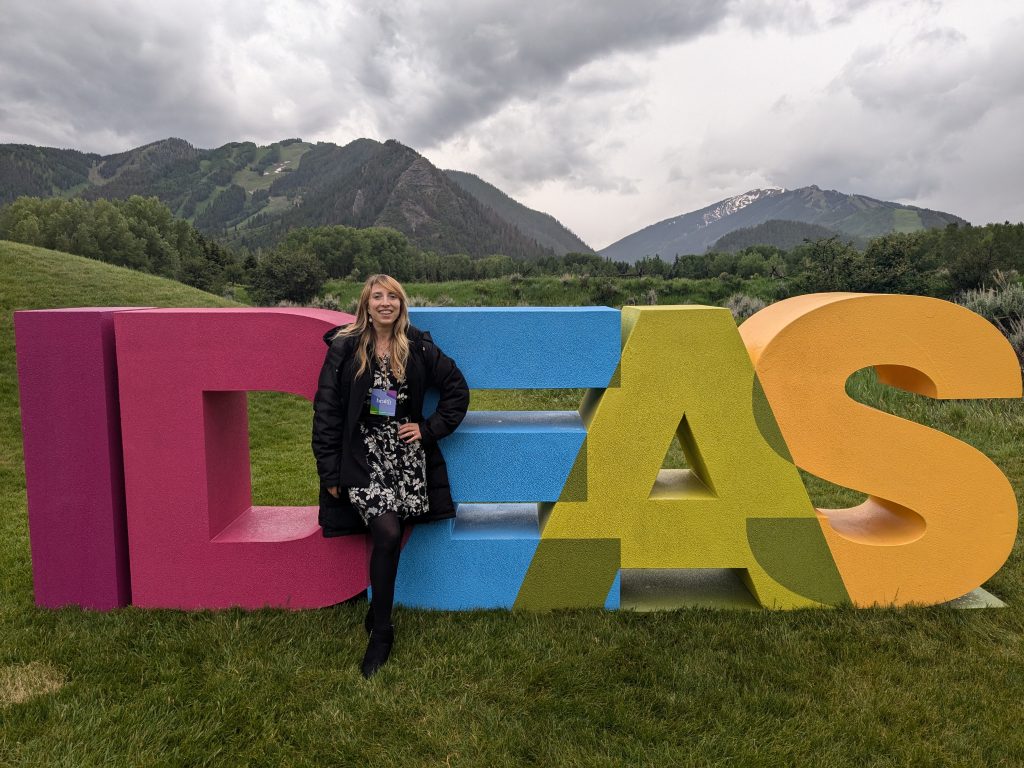
Photo credit: Aspen Institute
The first day of Aspen Ideas: Health brought the Fellows together for a meet and greet and exclusive visit from Admiral Rachel L. Levine, MD. Assistant Secretary for Health (ASH). She was truly inspiring and I felt honored to have the opportunity to hear her speak.
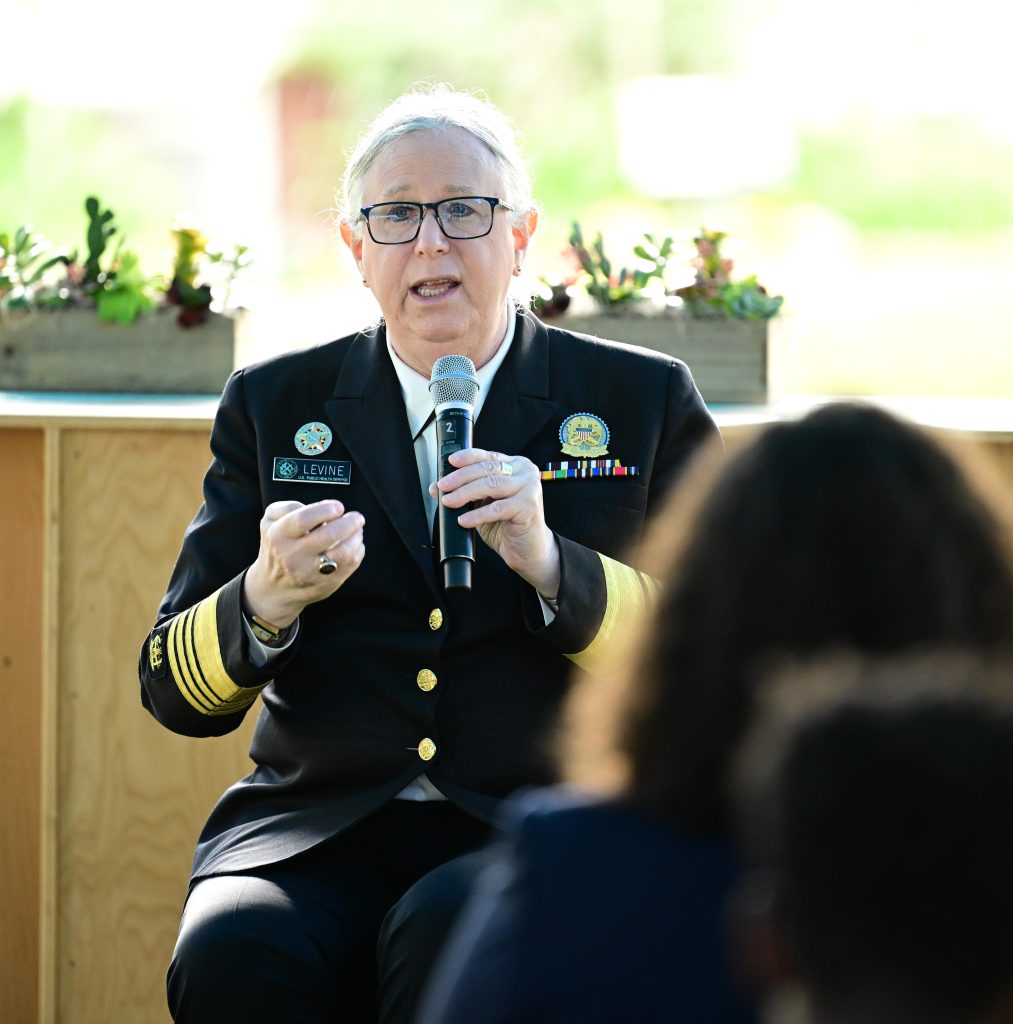
Admiral Rachel L. Levine, MD Assistant Secretary for Health (ASH)
Photo credit: Aspen Institute
It was a profound experience to meet the other Fellows. There was such a wide range of vocations within the group and I was moved by their passion when they talked about their work and backgrounds. When they asked about what I do I was validated and found that Art was welcomed as a vital part of “Health” as a whole. An essential component of a thriving world at large and also a benefit for individuals on a personal level. Following the Fellows reception we joined the other attendees in the largest tent on campus for the Opening Session. The Opening Session served as an introduction for what was in store. There were addresses by various speakers and Ruth Katz, director of Aspen Ideas Health, a vice president of the Aspen Institute, and executive director of its Health, Medicine & Society Program. A personal highlight of the Opening Session was a performance by cast members of “How to Dance in Ohio” a Broadway musical based on a true story about Autistic people with Autistic actors portraying the characters. Off the bat I felt that neurodiversity was being honored and highlighted in an honest and positive way.
The next three days were the type of blur that I can only liken to a very busy Theater Week. Or perhaps a summer camp full of activities so consuming that you forgot to miss your parents. I attended as many sessions as I possibly could with topics ranging from CRISPR technology and the future of medicine to Women’s Health, Politics, Artificial Intelligence.
A true highlight for me was a performance and discussion with Joshua Roman, renowned cellist. He performed and talked about his project “Immunity” inspired by his battle with long covid. Because of my synesthesia I could “see” the music while I listened. The cello’s sound undulates in deep browns and lighter chestnuts and sometimes but rarely touching into blue. It made me again see Art from a different perspective- one of appreciation rather than a challenge, a business venture, a personal love for something that is such a harsh, critical lover back. I saw how Joshua Roman’s music touched those around me and while I tried not to cry I remembered why I do what I do.
I was moved by the representation of neurodiversity with a session with Patric Gagne speaking about her book Sociopath: A Memoir. I am fascinated by how other people think. I have spent hours discussing perception, emotions and the senses with other synesthetes, autistic people and neurotypical people while developing my performances with Journey Through the Senses. Listening to Patric Gagne speak about her reality was intriguing and her honesty was admirable.
In the past I spent several years volunteering for the environmental group San Diego 350 on the transit committee so I was excited to have the chance to attend a session focusing on health in urban areas and how nature can be an influence. I was so happy to attend the session moderated by Vin Gupta of NBC New and MSNBC about greening cities through tree planting from Aruni Bhatnagar, battling the rat crisis in New York City through holistic strategies from Kathy Corradi (aka the Rat Tzar) and the importance of pollinators and racial justice from Samuel Ramsey.
Another highlight was a session with CDC Director, Mandy Cohen. Beyond speaking about ongoing challenges like Covid and Bird Flu she also talked about “heat” as being a threat to health. With global warming on our doorstep this was a very important message and a sobering realization of how much humans have to do to mitigate the damage to our planet and our health.
Finally I have to touch upon a session dedicated to thriving through the Arts. If the arts community had a monarchy then the people on this stage were in the royal family. Francis Collins, Renée Fleming, Christian McBride and Damien Woetzel were led by Sarah Lock of AARP to share their viewpoints on how the arts can be used as modalities in healthcare.
Over the years I have thought a lot about the identity of “ballet dancer” versus “artist” especially during the pandemic when I couldn’t perform and when I was a younger dancer going through a tough injury. In these times I found that “artist” is the more appropriate title for how I approach my work. In my own way I like to think of what I do as Journalism of Humanity. I try to choose topics of relevance for my inspiration which is why over time my choreographic pieces have been based on exploring my synesthesia, the women’s movement, climate change, covid, relationships and even health challenges. Looking around myself at Aspen Ideas: Health and absorbing the stories, expertise and the stunning volume of information from so many sources was my version of heaven. I’m not a scientist but I am fascinated by innovation and big ideas.
Science is pure imagination brought to reality. Women’s Health is a driving force in my political affiliations and activism. Having the opportunity to speak with leaders in this field of medicine brought me a deep appreciation for the work they do and hope that one day the tides will turn again to protect women and their health.
Two sessions were very important to me. The first centered on Women’s Health and reproductive healthcare. IVF is under attack in our country and with dear family members born from this technology I feel deeply about keeping reproductive care available and safe nationwide. Having the opportunity to listen to a discussion with Amander Clark, Natalie Crawford and Tammy Sun moderated by Savannah Sellers of NBC about the future of IVF and reproductive care was priceless. Another session I attended was a deep dive into the fall of Roe v. Wade through an interview with Lisa Lerer and Elizabeth Dias, Co Authors of The Fall of Roe: The Rise of a New America, moderated by Margot Sanger- Katz of the New York times. It was exceptional to hear from these women how the political forces came together to overturn the rights of women with such precission it felt to many like a quick blindside rather than a slow moving strategy.
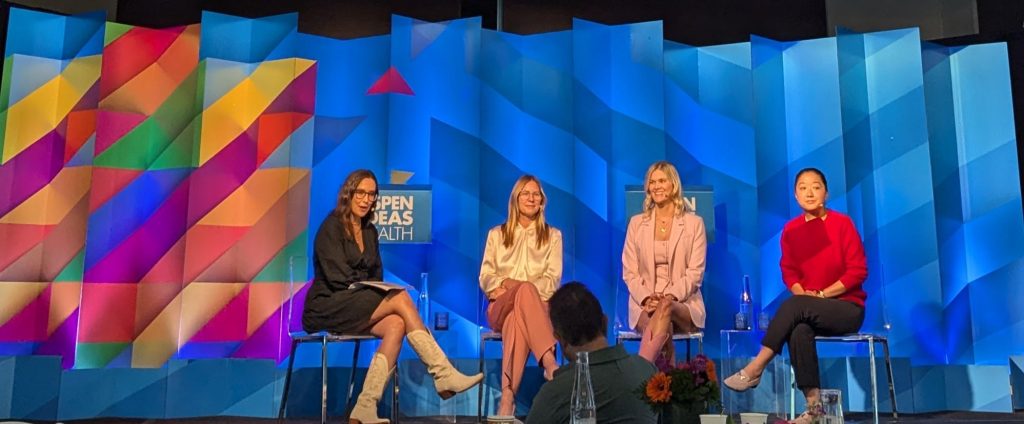
The Future of Fertility with Amander Clark, Natalie Crawford and Tammy Sun moderated by Savannah Sellers
The multitude of outstanding speakers was spectacular. Finally by the Closing Session I knew that this had been a transformative experience beyond my expectations. As the Festival drew to a close, the largest tent was full of attendees and we were graced by another performance by Joshua Roman (evoking tears from the audience just as before) and appearances by Sebastian Junger, Atul Gawande and U.S. Surgeon General, Vivek Murthy. Vivek Murthy spoke with eloquence about his work and the concerns of the nation. His words about the loneliness epidemic struck a poignant note of truth. It hurts when I see how divided, sequestered and downright lonely Americans have become, in many ways prompted by our addiction to our phones and Social Media taking the place of what used to be real life relationships. Vivek Murthy’s words stuck with me and I am making a more conscious effort now to decrease my screen time and reach out to loved ones.
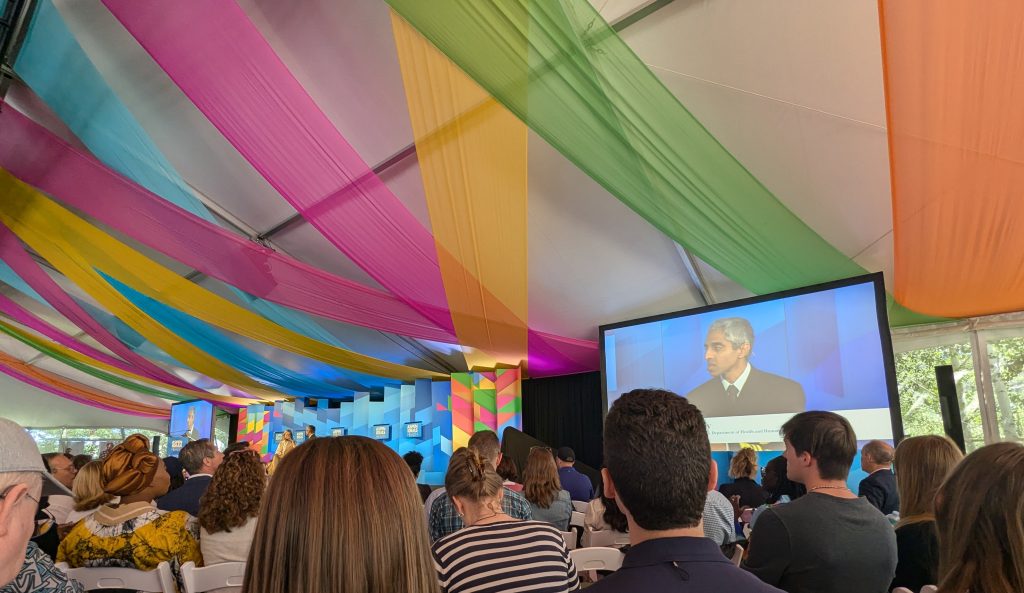
U.S. Surgeon General, Vivek Murthy at the Closing Session of Aspen Ideas: Health
In many ways the Aspen Ideas: Health Festival was all that I had imagined it could be. Yet I was still struck by the sheer volume of knowledge shared by the speakers and attendees and by the way that learning from others gave me a better sense of myself. I am very grateful to the Aspen Institute and everyone who made it possible for me to attend Aspen Ideas: Health. In my opinion there is little that can make me more happy than being part of something greater than my niche in the art world. It didn’t hurt that it was also in one of the most serene and beautiful locations on earth.
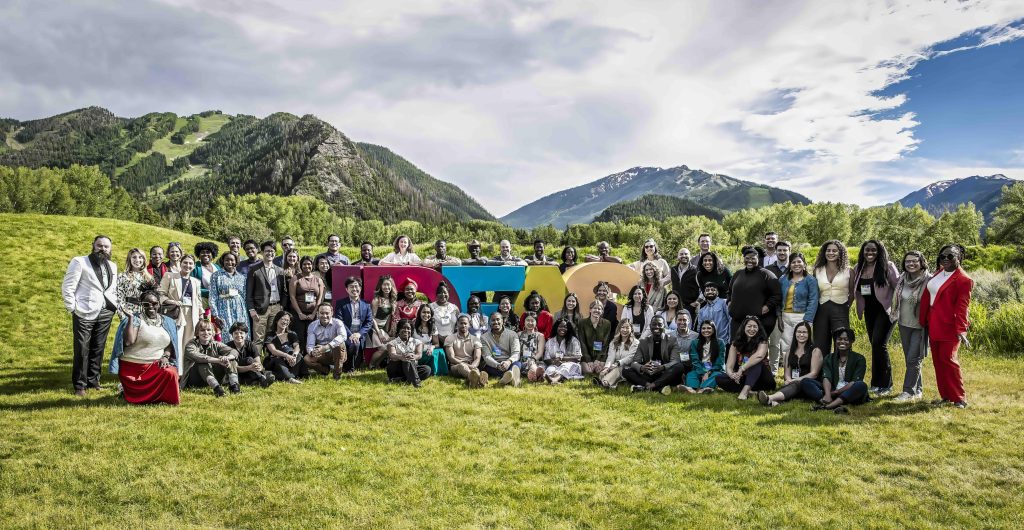
Aspen Ideas: Health Fellows, 2024
Photo credit: Aspen Institute