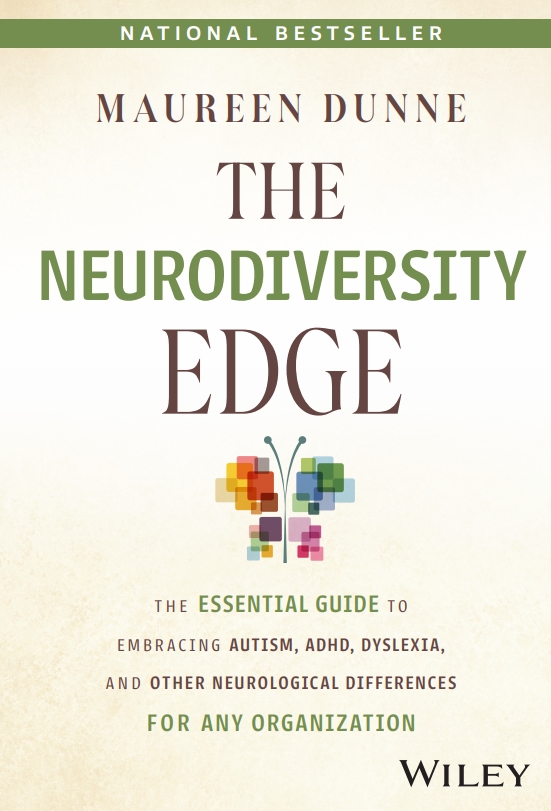
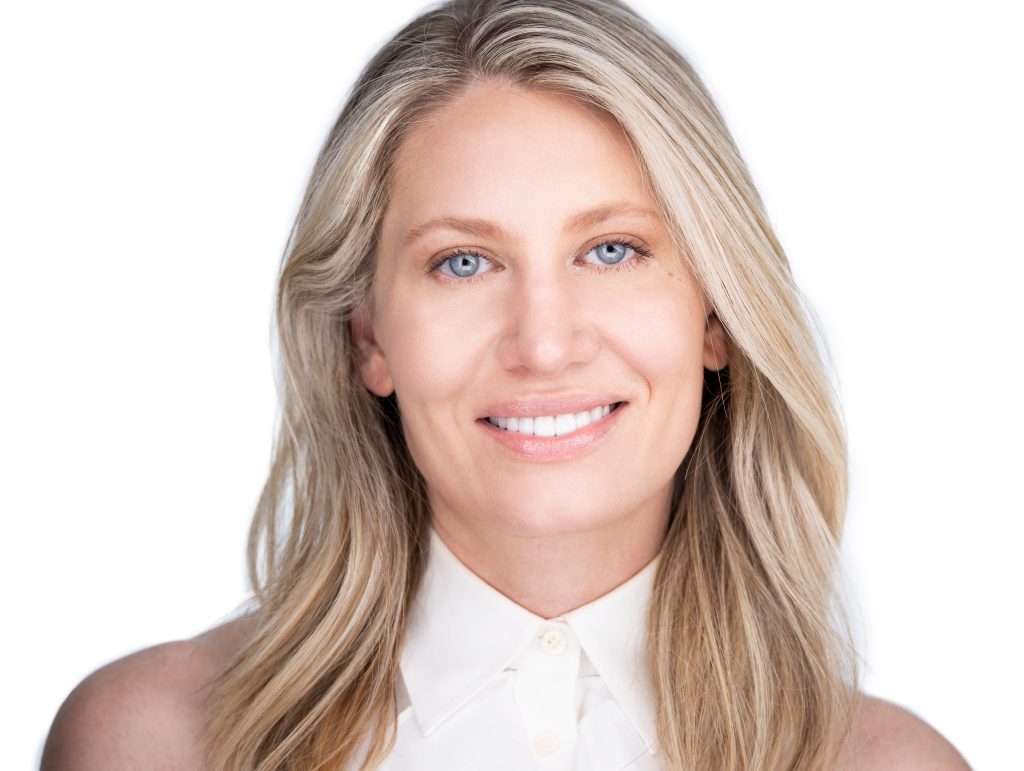
Maureen Dunne, author of the best-selling book, The Neurodiversity Edge, says it will take a broad range of “neurotypes” working together to manage today’s most pressing issues
| “We have more research underway that stands to show how important neuroinclusion is for success, innovation, and risk management.”—Maureen Dunne, author, The Neurodiversity Edge |
The author is interviewed by Patricia Lynne Duffy
PLD-In your excellent book, The Neurodiversity Edge, you advocate for the benefits of “cognitive diversity,” suggesting that organizations hire individuals with various neurotypes to leverage different thinking styles. Is there a natural distribution of neurotypes in any given society, and is it important for this diversity to be reflected within organizations?
MD-You get to a very important point here, and one that is central to my book and my message to organizations: Everywhere we look, we see human populations displaying a roughly 4:1 ratio in terms of the distribution of neurotypicals to neurodivergents. And I cover a broad selection of research that supports the idea that this distribution is how our communities work best. We see this in other biological systems as well, including honeybees, where about one in every five seem to deviate from quote-unquote typical behavior within the hive, and this divergent cohort ends up responsible for a disproportionate share of the hive’s innovations.
PLD-Do we see this “distribution of neurotypes” reflected in the corporate world?
MD: When we look at the corporate world, we find HR management and hiring systems don’t focus much on the community-level mix—instead, they do mainly individual-level evaluation. If you add in a general bias toward “culture fit” and the statistically exaggerated impact of traits like eye contact and social ease and fluency, this is a recipe for generating organizational communities that almost entirely exclude that neurodivergent cohort. And when you exclude that cognitive and experiential diversity, you lose that element of a wider matrix of perspectives and ideas.
PLD-What repercussions might this have for organizations?
MD: In a world defined in many industries by a persistent labor shortage, you also lose out on a wider field of candidates for open positions. When you look at large organizations, excluding these dynamics can be the difference between success and failure.
PLD– Certain neurotypes, such as those on the autism spectrum, individuals with ADHD, and those with dyslexia, have historically been pathologized. Yet, your book highlights their positive attributes, such as objective decision-making and superior pattern recognition. Are these positive qualities now more acknowledged by HR departments?
MD: Only minimally in my view. That’s the sad part of the story. You would be amazed by some of the opinions and comments I still see. The strengths-based paradigm and the neurodiversity movement have been around for more than two decades. And in all that time, I’m not sure the needle has moved much. We had 30-40% unemployment for neurodivergent people 25 years ago. That’s still where we are today.
But this conversation is starting to become a more mainstream phenomenon, which suggests we are nearing a breaking point where organizations will start to take this new paradigm into consideration when building teams. We also have more research underway that stands to show how important neuroinclusion is for success, innovation, and risk management.
PLD -Many of the world’s most innovative thinkers have been neurodivergent. Could you provide an example or two?
MD: One of the questions I address in my book is this: How is it possible that many of our trailblazing innovators and entrepreneurs throughout history have been neurodivergent or display strong neurodivergent traits yet most remain strikingly left out of the economy altogether? There are so many examples and from different professions — science, arts, entrepreneurship, technology, music, and even politics: Benjamin Franklin, Albert Einstein, Mozart, Temple Grandin, Thomas Jefferson, Andy Warhol, Woodrow Wilson, Elon Musk, Richard Feynman, and Richard Branson.
PLD: Your book advises against hiring individuals who are too similar in their problem-solving approaches and perspectives. However, some organizations hesitate to hire neurodivergent individuals due to concerns about their ”fit” within standard work environments. What strategies can be employed to address and overcome this resistance on the part of recruiters?
MD-As noted above, this tendency to overvalue “culture fit” has powerful implications. Innovation often comes from looking at a familiar problem in a new way. Most problems are familiar ones at most organizations. Hiring for ‘same-ness’ and group cohesion is a recipe for disaster over time because you’re never going to climb out of those familiar bogs. Cohesion is everyone looking in the same direction. But what if salvation or oncoming existential risk are the other way?
The cure is to foster a culture that deeply and sincerely embraces cognitive diversity, trust, and psychological safety. If that’s in your DNA as an organization from the mail room to the board room, the leap to the hiring process is a short one. In my book, I offer a number of specific tools and exercises for traversing that barrier. Everything flows from making authentic neuroinclusion a specific goal.
PLD–While neurodivergent individuals bring valuable strengths to the workplace, they may also face unique challenges. What are some examples of these challenges in a standard work environment?
MD-It’s an important question. Neurodivergent individuals often encounter unique challenges including sensory overload from bright lights and loud noises in open office spaces, difficulties interpreting social cues and indirect communication, and rigid work schedules that clash with their personalities and unique patterns.
Executive functioning challenges may affect their ability to organize, prioritize, or multitask, and stigma or misunderstandings about neurodiversity can lead to social isolation or reluctance to disclose their needs. Then you have “masking” [when a person tries to hide their neurodivergent traits] on top of all this, which is a huge and underappreciated drag on energy, productivity, and performance.
The good news is that most of the solutions that counter and accommodate these challenges offer value to everyone else, too. Many employees are more comfortable with less noise and harsh lighting in their workspaces. This is why I focus so much on universal design principles. Everyone benefits from reduced distraction, increased transparency and directness, some degree of optionality and autonomy to drive creativity and a sense of ownership over outcomes at work — and a sense of acceptance and psychological safety and belonging in their organization.
PLD : Can you say more about how employers might benefit from what your book calls “authentic neuroinclusion”?
MD: We can learn much from each other, especially in terms of how to build communication and empathy bridges across neurotypes. I have applied this model with the inclusive coding bootcamps I run funded by corporate partnerships and the Discovery Partners Institute. It is amazing to witness the learning curve, productivity, and happiness for everyone involved when genuine neuroinclusion is actually happening in practice!
PLD-What inspired your research and interest in neurodiversity? Do you identify as neurodivergent yourself?
MD-Yes, I do identify as neurodivergent. I am what you would call a projector in terms of my conceptual synesthesia, where I can rotate and combine concepts in mental space. Authentic neuroinclusion has been the focus of my research, including my doctoral studies at Oxford University.
PLD –Is there anything else you’d like to share about your book, The Neurodiversity Edge?
MD: Perhaps there is a world that works better than the one you see around you each day. Not just better morally. Better practically. We are prisoners of an erroneous paradigm about neurodivergence. The paradigm shift is underway. Ultimately, we are likely talking about life outcomes involving billions of people. And every one of us can either help shepherd in Neurodiversity World 2.0 or to stand in its way.
Organizational leaders need to understand this opportunity because, while this benefits everyone, it really matters where you are in the process. Those first in – stand to benefit most. This game theory landscape will be increasingly sloped as we head further into the age of AI due to the remarkable complementarity between strict linear processing and non-linear cognitive profiles.
PLD: Thanks for these amazing insights…we look forward to a world where contributions from the range of neurotypes becomes standard. And we look forward to more guidance and recommendations as your research continues.
Patricia Lynne Duffy is the author of the now classic, Blue Cats and Chartreuse Kittens , the first book by a synesthete about synesthesia. An audio version of the book with research updates, music by synesthete-composers, and an “Afterword” is available from Audible . She also contributed a chapter, “Synesthesia and Literature” to the Oxford Handbook of Synesthesia. See her website, http://bluecats.info/