(Rooted in devotion, illuminated by collaboration, and offered in gratitude to you — the reader — whose inner voice animates these words as they unfold)
By Marjan Khoshbakhti Vayghan
مرجان خوشبختی وایقان
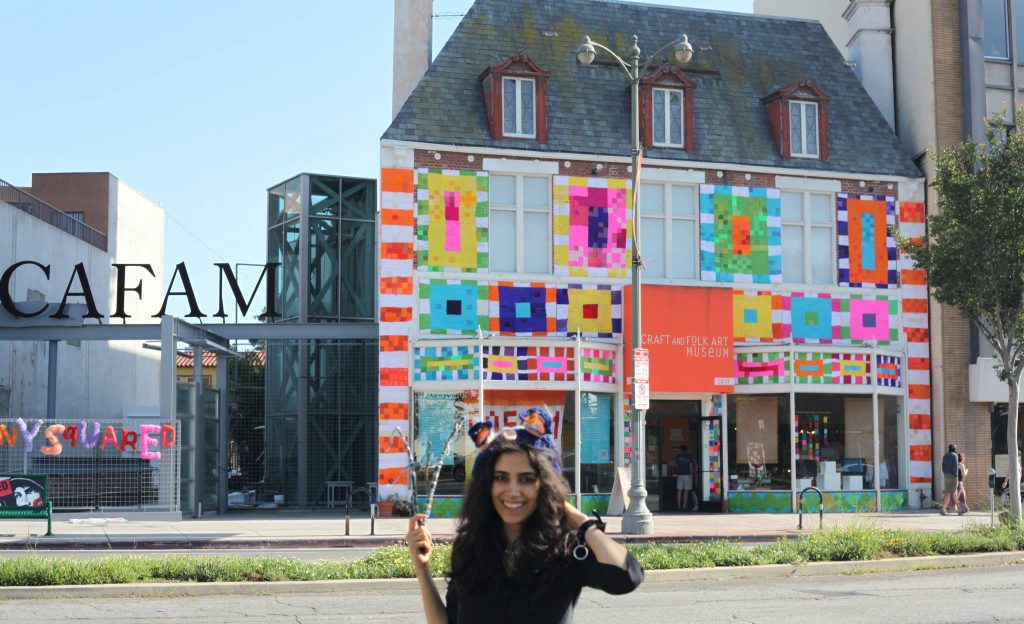
This photograph shows me in front of the Craft and Folk Art Museum in Los Angeles at the moment when my collective, Yarn Bombers LA, and I covered the entire façade of the museum in hand-crocheted granny squares.
The gesture transformed the institution’s exterior into a living textile surface—softening architecture through collective labor and reclaiming public space with care, color, and domestic craft traditions historically associated with women’s work.
This intervention positioned fiber art not as decoration, but as social sculpture and community authorship.
Prelude: On Text, Time, and the Sacrosanct Act of sharing conceptual breath
I have many creative passions in this lifetime — but none as faithful, none as quietly sovereign, as my devotion to writing you.
Text is sacrosanct to me.
So before we descend into the ocean of letters and sounds that bind us — before language performs its oldest miracle, carrying experience across centuries and nervous systems — let us pause.
This pause is not empty. It is a tuning.
It is an honor to speak to you through the sands of time. In this moment, we are already time travelers. I am placing my creative heart inside a vessel made of language and releasing it into an ocean of digital signals, trusting it has reached — softly — the inner shoreline of your awareness.
Before any sentence settles, notice this:
There are at least three of you here with me. One part of you is reading these words. Another part is listening as they are spoken internally, as though whispered by an intimate companion.
And a third presence — older, quieter — is witnessing both, deciding what to welcome, what to release, and what to quietly weave into the fabric of our becoming.
We’re not mystic poetry alone. This is cognition. We are how meaning enters the body, mind, and becomes soul.
Words are mystical, yes — but they are also comprehensive and conceptual technology. Writing and reading are how we bend time. How ancient voices remain warm. How new futures are rehearsed inside living tissue.
Art, fashion, cinema — they function within the same architecture. They do not merely decorate life. They carry memory. They ask to be inhabited.
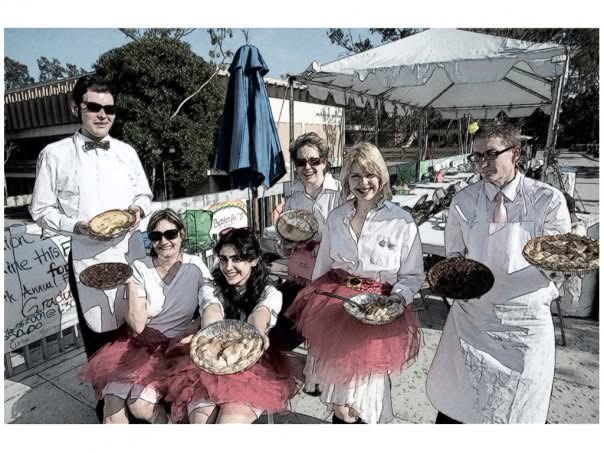
(In this image, I designed conceptual uniforms and tutus for our Marching Waitresses collective during the Occupy-era civic movements.
Our action—sometimes called “Oc-Pie”—invited the public to name the value of the “pie” they desired, merging fashion, performance, and economic critique.
The work challenged outdated deficit-based narratives about collective participation, reframing the crowd not as a glitch in the system but as evidence of shared imagination and possibility.)
Every act of reading is already a collaboration between multiple intelligences inside one body. Meaning does not arrive complete. It assembles itself — neuron by neuron, breath by breath, memory by memory.
This triadic awareness is not only how I write.
It is how I design.
It is how I curate.
It is how I care.
In this moment — before we have met — our inner worlds are already in dialogue. Something subtle, precise, and real is occurring. I take this privilege with devotion.
I am writing to you from a liminal hour — between Christmas and the New Year — wearing a very cute Santa outfit, overlooking the Santa Monica Pier and the Pacific Ocean from the eighth floor of a sea castle. Beside me, a tomato plant ripens, turning red in its own time. I am braiding together several articles that insisted on becoming one — summoned by a phone call, shaped by patience, guided by love.
Thank the Multiverse for words — even as they bow before the vastness of being alive.
Let us begin.
Threads of Care Los Angeles ·
December 2025
Head of Costume & Wardrobe · Pre-Production through Principal Photography
December 16–22, 2025
If meaning is assembled — internally, relationally, physically — then costume is one of its most intimate architectures.
Costume as Interface: The Jealous Son When I stepped into the role of Head of Costume & Wardrobe for The Jealous Son, I understood the task not as adornment, but as translation.
Costume is where script touches skin.
Each garment emerged through a triangulation of care:
the character as written, the character as psychologically lived, and the character as embodied — moving through land, weather, time, and consequence.
From the earliest stages of pre-production, my work unfolded as both research and relationship. I facilitated the presence of Native American elders and First Nation cultural advisors not as symbolic gestures within our department, but as living intelligences embedded in the process.
Authenticity is not achieved — it is practiced, perfected by elders and ancestors.
Across the full arc of production — research, sourcing, industrial sewing, on-location continuity — costume became a stabilizing field. Fabric adapted to breath. Seams learned movement. Clothes remembered.
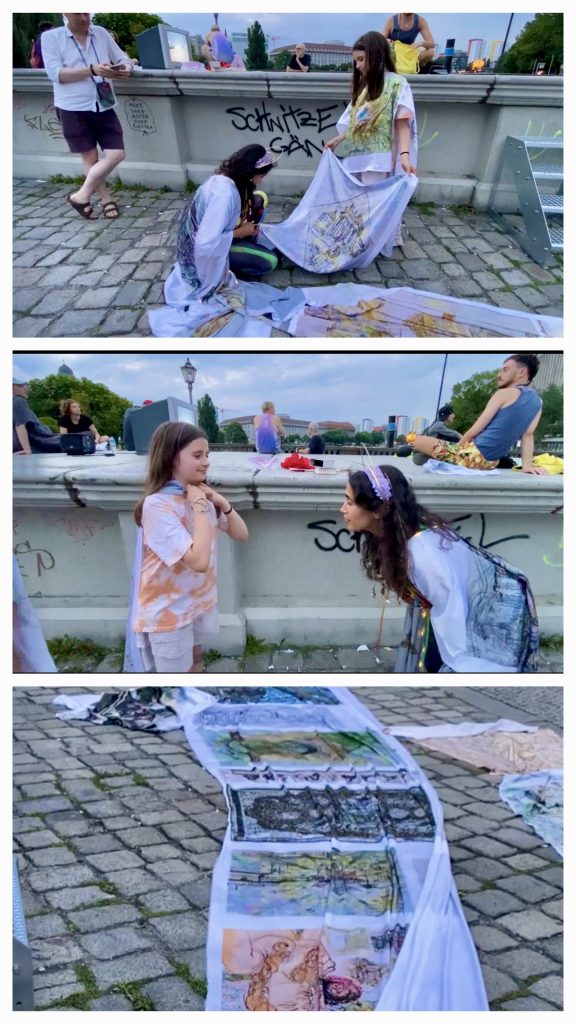
(Here I am performing on a bridge in Berlin wearing a 300-yard dress composed of my own paintings and drawings, created within the B-LA-M collective (Berlin–Los Angeles–Mexico City).
Over three weeks of durational performance, I slowly cut pieces from the dress and transformed them into miniature garments for audience members.
The work shifted authorship from artist to community, turning the dress into a living archive of participation and a meditation on generosity, impermanence, and shared creation.)
This is not metaphor.
Textiles store information.
Bodies recognize truth.
In physics, observation alters outcome. In costume, care alters embodiment.
The garments did not merely clothe the characters — they participated in their becoming.
I often create handmade shoes, because how a body meets the ground reveals everything. Walking is a conversation with gravity. Shoes are philosophy.
Natural fibers — wool, cotton, hemp, silk — interact differently with the human nervous system than synthetic materials. They breathe. They regulate temperature. They carry histories of touch. What we wear does not simply cover us; it entrains us. The body knows, feels, and emits unseen joy.
From Word to Voice: LA Opera and the Body as Instrument Zarzuela Project — Rehearsal & Research Period: Early October–December 2025 Public Performance: December 14, 2025
After weeks of rehearsal and material research in early October, our collective voices and breath work culminated in a public performance with LA Opera’s Zarzuela Project on December 14, 2025.
The same attentiveness — to the word, fashion, the arts, and the songs of all living beings and vibrations — carries me into vocal performance with LA Opera’s Zarzuela Project, where language migrated from page into breath.
Singing Spanish repertoire rooted in zarzuela tradition, I was reminded that the body itself is a textile — breath woven through muscle, memory encoded in vibration. Voice is costume made of air.
Without voice, we are displaced; in chorus, we remember ourselves.
My collaboration extended beyond performance into costume and wardrobe research, sourcing historically resonant, plant-based materials to support visual coherence. Sound, fabric, gesture, and history are inseparable.
In contemporary physics, vibration precedes form.
Matter is frequency, slowed into visibility. Opera understands this without equations.
Mexico City: Cinema, Audience, and the Return of Meaning B-LA-M Festival & Exhibitions: Mid-October–Mid-November 2025 Museo Tamayo — Night of Screens: October 30, 2025
I lived and worked in Mexico City from mid-October through mid-November, holding space between exhibition, performance, and cinema across multiple sites and publics.
In Mexico City, with the country illuminated for Día de los Muertos throughout our stay, our work widened — into cinema, audience, and collective psyche.
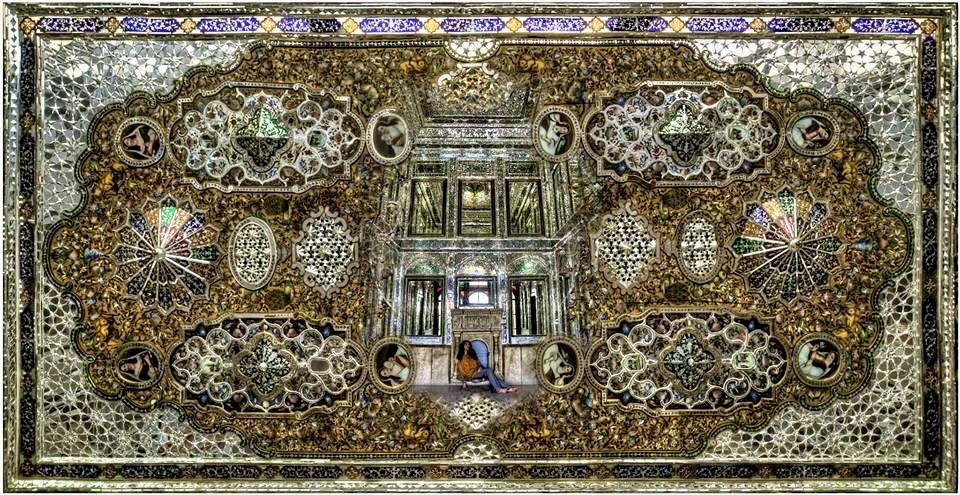
(This photograph shows me wearing one of my creations inside a structure made from small pieces of glass.
The work is inspired by a historical story from Iran: when one of the first large shipments of glass arrived shattered, artists chose not to discard the fragments but to intentionally cut them smaller and rebuild beauty from breakage.
This philosophy guides my practice—especially in costume and wardrobe design—where every rupture or obstacle becomes an opportunity for pattern, elevation, and transformation)
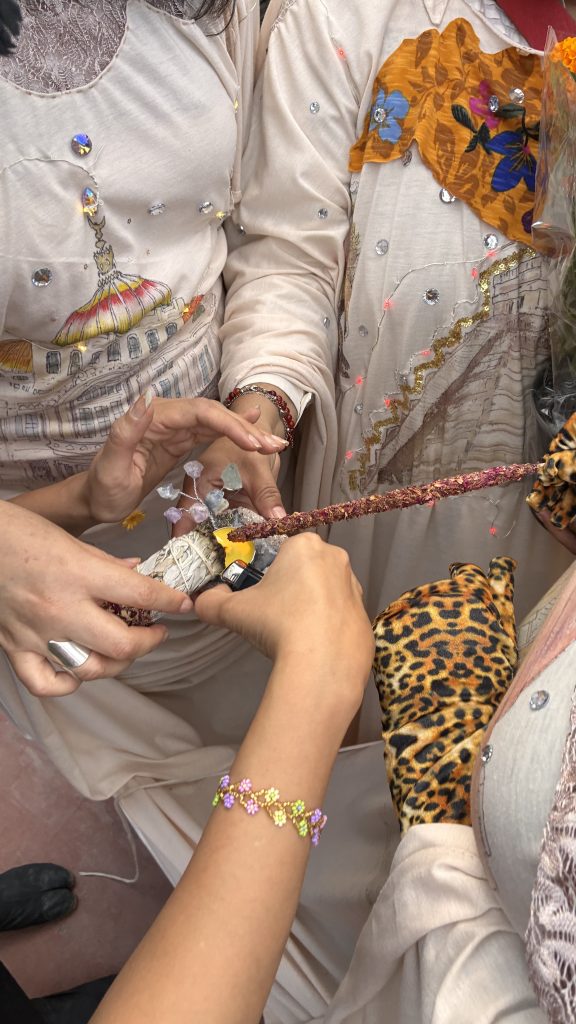
(This image documents a three-person conceptual dress activated through ritual movement and collective presence in Mexico City.
The surface of the garment is covered in drawings and paintings from the places I visited while exhibiting artwork and serving as MC for the Los Angeles Film Festival program at the museum.
The dress functions as a portable landscape of memory, binding bodies together in gestures of unity and peace.)
As an exhibiting artist with B-LA-M, and as presenter and MC for the Los Angeles Film Program at Museo Tamayo, I stood between cities, between iterations. Many of the films had already lived in Berlin and Los Angeles.
What interested me was not novelty — but return.
How does an image feel when encountered again — in a changed body, in a changed world, by ICE?
Meaning is not fixed. It is relational, historical, and grand — present in tragedies, transformations, and evolutions.
Each viewer arrived carrying their own triadic intelligence — reader, listener, integrator — and cinema activated all three simultaneously. Film unfolds as consciousness does: in time, through attention.
Care extended beyond the screen.
After the LA film festival, The Museo Tamayo and Laura Resendiz presented the Mexican film festival in a remarkable way: four live film projections spilled beyond the borders of the designated screens, enveloping walls and ceilings. The experience became multiple, sensory, interactive, and immersive — a cinematic architecture that transcended the expected, inviting the audience into a living, breathing field of perception.
Performance as Living Archive
Los Angeles · May–December 2025
Durational performances, installations, and exhibitions unfolded across Los Angeles throughout 2025 — from Echo Park to West Hollywood, Sunset Boulevard, Torrance, and Silver Lake.
Back in Los Angeles, through Art in Odd Places: VOICE, TRYST, Echo Lab LA, and the LA Resistance Series, my work functioned as a living archive.
Dresses became altars.
Installations became shelters.
Audiences became collaborators.
Again and again, I witnessed the same longing:
to be held by systems that acknowledge complexity.
These works unfolded slowly, beyond clocks and schedules, because care resists compression.
The PLANT Collective: Intelligence Without Language
Southern California · Ongoing
Founded 2025 · Winter Gifting Cycle: November 2025–March 22, 2026
During the winter season alone, hundreds of plants were grown, rescued, rehabilitated, and rehomed through direct, relational gifting.
All of this returns me — inevitably — to plants.
Through the PLANT Collective, I have gifted hundreds of plants — grown, rescued, rehabilitated, and rehomed. Some are cultivated on my land in Yucaipa, where plants are treated not as resources, but as elders and collaborators. Others are rescued from neglect and given new lives.
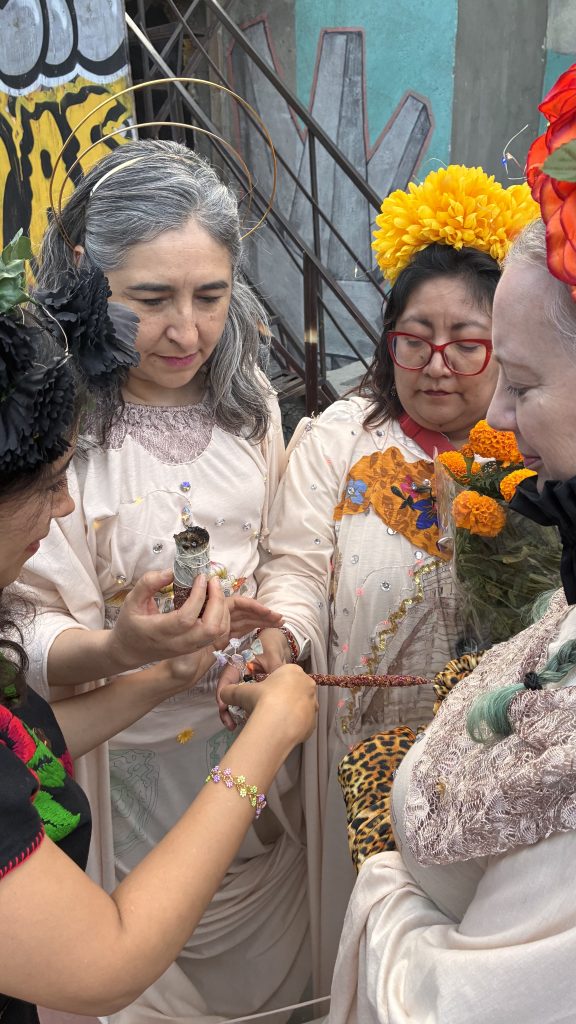
(This photograph captures a four-person conceptual dress performed over three days during Art in Odd Places.
Audience members were invited to draw, paint, and contribute directly onto the garment’s surface during daily performances.
The piece expanded the idea of fashion into durational, participatory public art, dissolving boundaries between viewer and maker.)
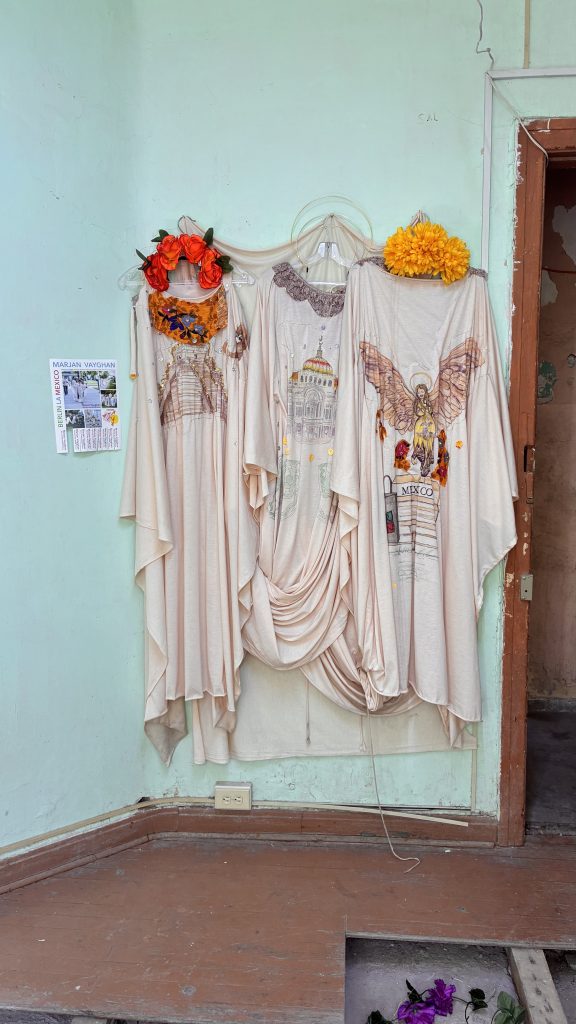
(Here the same dress appears suspended on the wall, revealing painted imagery across both front and back surfaces.
Early in the journey only partial imagery covered the textile; by the end, the garment had become fully saturated with marks of travel, encounter, and time—transforming costume into accumulated geography.)
Plants perceive.
They respond to light, touch, sound, proximity.
They communicate through roots, chemistry, and timing.
They are covered in sensory intelligence we are only beginning to understand.
Each plant carries multiple voices:
the one who tended it,
the one who receives it,
and the plant itself — listening, seeing us, adapting, remembering.
When I gift a plant, I am offering relationship — a living agreement of care.
Plants do not dominate.
They network.
They survive together.
Entanglement as a Way of Life
(A closing without time — we’ll meet soon in timelessness. Because when we reunite, we enter a rejuvenative state of oneness.)
Physics tells us that entangled particles remain connected across distance. Care behaves the same way. Everything described here — costume, opera, cinema, performance, plants — exists within a single field. Threads cross. Meaning reverberates. Nothing is isolated.
If this piece has done its work, then something in us has shifted — quietly, internally — without needing to be named.
One part of you has read.
One part has listened.
Another has already integrated.
That is enough.
That is care.
Love is life meeting life — animated by curiosity, devotion, and the courage to collaborate. Where we fall, we reach. Awareness cascades through our creative practices, allowing us to build together what no individual could hold alone.
Thank you for walking this terrain with me. Perhaps we chose this planet — this moment — so this inner conversation could exist.
May you look at plants differently now.
May you feel fabric differently on your skin.
May you remember that care is not abstract — it is practiced.
With a multiverse of gratitude — for you, for the words we shared,
for the garments worn during this encounter,
for the plants surrounding us,
and for the arts we live and love. ,
Marjan Khoshbakhti Vayghan
مرجان خوشبختی وایقان
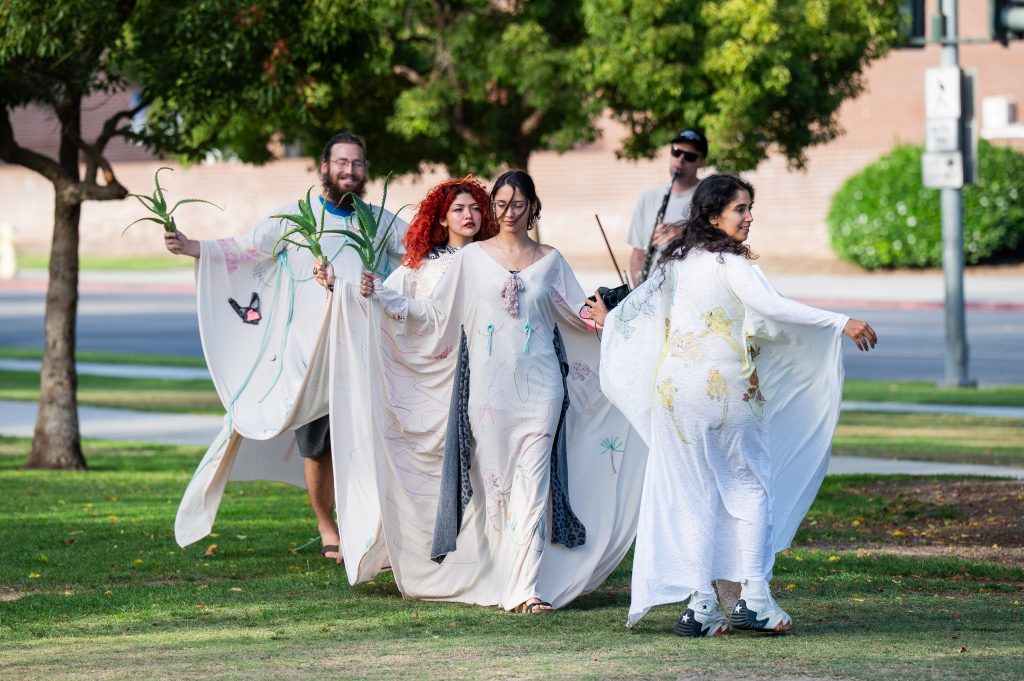
(The final image shows the same work after evolving from a four-person structure into a three-person living sculpture, activated on Sunset Boulevard in Hollywood.
This transformation reflects my ongoing interest in garments as mutable architectures of relationship—forms that shift with community, context, and time.)
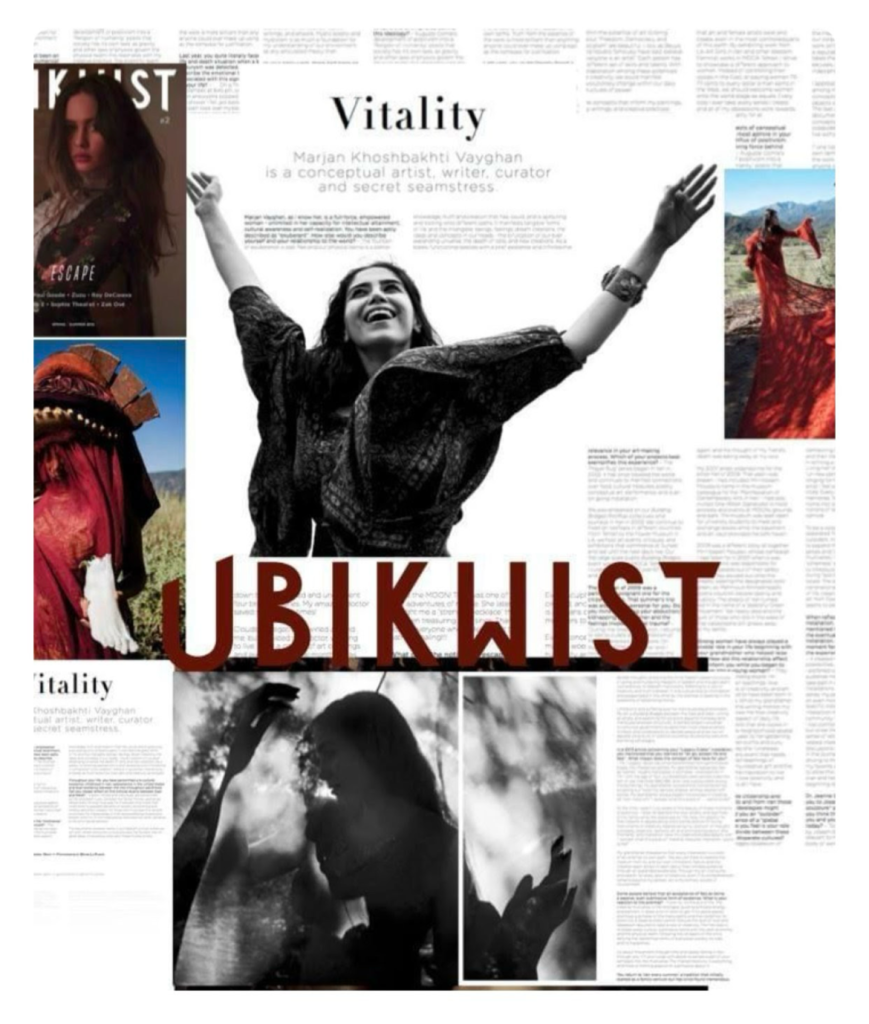
(This image documents my fashion and creative process as featured in Ubiquitous, an art and literary publication devoted to emerging contemporary voices and interdisciplinary practice.
For me, appearing in print is never about visibility alone.
It is about translation — the moment when a living, wearable artwork enters another form of time.
Garment becomes image.
Process becomes archive.
Care becomes record.
My work moves between performance, costume, drawing, and collective ritual, so this feature holds special meaning: it affirms that fashion can function as conceptual art, and that textiles can carry memory, collaboration, and lived experience across bodies, cities, and pages.)
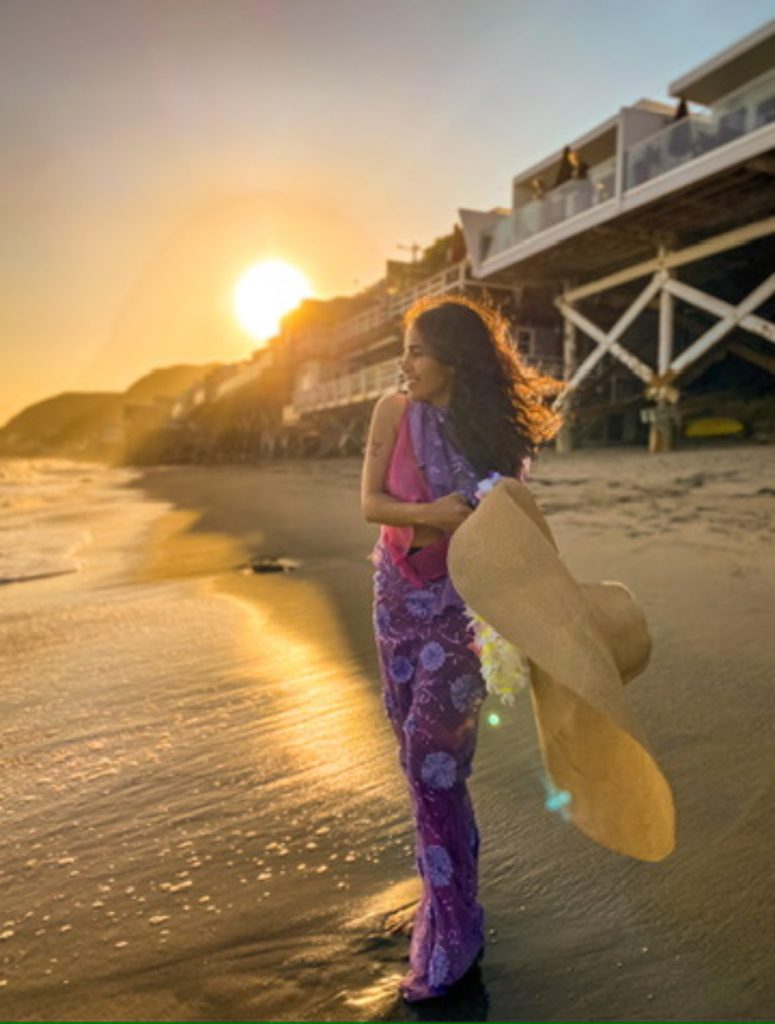
(This final image shows me wearing two of my own creations layered together at the edge of the Pacific Ocean — a place I return to daily to write, sew, draw, and imagine what comes next.
The ocean is part of my studio practice.
Its rhythm shapes my thinking.
Its horizon reminds me that creation is both intimate and infinite.
Here, fashion is not staged for spectacle.
It is lived.
Worn in motion, in wind, in salt air — where fabric meets breath and time slows enough for new forms to emerge.
This is where many of my works begin:
between water and land,
between solitude and world,
between the quiet act of making
and the future that waits to be stitched.)