
— and Plenty of Them
The groundbreaking author recalls childhood experiences that helped her thrive.
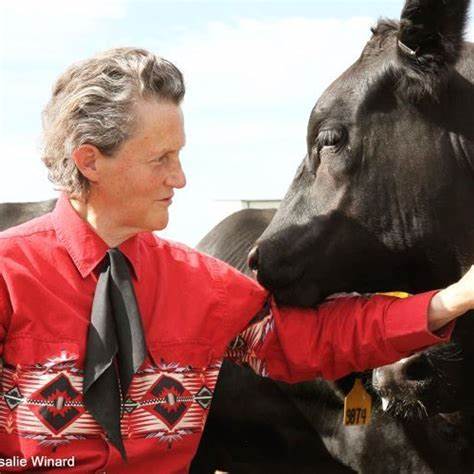
Temple Grandin, author
|
“My mother offered me choices of activities—but the choices were always within boundaries that would lead me to interact with others, and led to spending my first summer at my aunt’s ranch in Texas, where I discovered my passion for working with horses and cattle.” |
Article by Patricia Lynne Duffy
Temple Grandin, the groundbreaking author who expanded public awareness of those on the autism spectrum, is someone I’ve long wanted to converse with at length. Her research is impressive, as is her openness. Grandin made observing and sharing her own autism part of her research and presentations on the subject.
I first met the author in 2006 while standing in a book-signing line at Barnes & Noble in New York City. Grandin signed the revised edition of Thinking in Pictures, which I had just purchased—an illuminating book in which she explains that she “thinks in pictures”: images and their associations compose her thoughts rather than a continuous “word narrative.”
At the time, I was researching synesthesia and was eager to understand how differently wired minds take in the world. Research suggests a link between synesthesia and autism—nearly 20 percent of those on the spectrum experience synesthesia, often sound-color. Both groups show unusual neural connectivity, and visual thinking can manifest in distinctive ways.
Our brief exchange that day left me wishing for more time. Two decades later, I had the opportunity when I interviewed Grandin about best practices in caring for autistic children, focusing on her recent book, Navigating Autism.
In one conversation, Grandin recalled a formative episode from her childhood: at age 12, she left her home in a staid Massachusetts town to spend the summer at her aunt’s ranch in Texas, tending horses and later, cattle.
As she described that summer, her vivid storytelling let me “see” the young Temple by the wooden fence, calling the horses, noticing subtle shifts in their behavior, and mastering horseback riding with confidence. Speaking with Grandin is energizing; she is fully “there” in her words. That immediacy—free of self-consciousness—makes her energy compelling and takes the listener in.
The young Temple felt a kinship with the animals, sensing overlap between their unembellished perception, free of artifice or guile, and her own. That connection allowed her to develop an intuitive understanding of how to manage them. Her connection with horses allowed her to lead visiting riding groups along the ranch trails with quiet authority
Grandin credits that summer with setting her on a path to her career that reshaped the livestock industry. Her deep understanding of cattle behavior enabled her to design more humane systems for cattle entering meat-processing plants. Through her visual thinking—her ability to picture structures in three dimensions and intuit “cattle perception”—she developed curved walkways that calmed animals and reduced stress. Her insight allowed her to reject the simplistic label of cattle as “dumb animals,” recognizing their perceptual realities instead.
She is equally firm about labels applied to people. The label “autistic,” she insists, should never define a child. In her book, Navigating Autism, the entire first chapter, “Every Child is More than Autism” is devoted to this. Each child on the spectrum is complex, composed of many qualities and inclinations. Among autistic traits may be gifts—attention to detail, pattern recognition, sustained focus—alongside challenges such as difficulty reading subtle social cues or distress when routines change.
The 2010 HBO film Temple Grandin, starring Claire Danes, dramatizes episodes from her life, including the bullying she faced from peers and the well-known “deodorant scene,” which Grandin cites as a model for behavioral correction: be direct about what needs to change, and speak in a neutral tone—neither irritated nor overly solicitous.

Author Temple Grandin, actor Claire Danes
The movie is often shown at events on annual World Autism Awareness Day (April 2).
Much of Grandin’s advice to caregivers of autistic children comes from her considerable research and mining her of own experience as an autistic child.
For non-verbal children, she strongly supports early intervention. Grandin herself did not begin speaking until age four. Intervention, she says, can begin with games—especially turn-taking games played with others in 3-D, not only online. Turn-taking fosters rule-following, balanced interaction, and impulse control—skills particularly important for children on the spectrum.
She emphasizes “one-thing-at-a-time” environments. Overstimulation can overwhelm autistic children; low-key settings allow them to process each step and follow their natural focus. Learning which activities are fulfilling, while developing strategies to manage overload, can serve them throughout life.
Caregivers, she suggests, can check out environments in advance to determine their suitability: visit stores during off-hours; avoid crowded or noisy conditions. While shopping, give children specific tasks—locating items, categorizing them in the basket—so outings become structured opportunities for engagement rather than sources of stress.
Some of her advice could apply to children across the board but is particularly pressing for those with autism: “Get autistic kids out of their rooms and off their devices. Get them into the 3-D community to play games with peers, go shopping, volunteer to walk the neighbor’s dog, and discover the activities they love. In so doing, let them develop the life skills they need.”
It is hard to believe that the diagnosis of “autism” is a relatively recent one: “Autism Disorder” was listed in the DSM III (The Diagnostic and Statistical Manual of Mental Disorders, third edition) only in 1980. It was not until 2013 that “Autism Spectrum Disorder” (ASD), which categorized autism into levels 1,2, and 3 became a diagnosis (listed in the DSM V), and replacing such terms as “Aspergers Syndrome”. Grandin credits pioneering scientists such as Uta Frith for research that established “ASD” as a “neurological-cognitive disorder”, rather than a result of insufficiently affectionate parenting (as recently as the 1960s and 70s’, “frigid mothers” were often cited as the cause of autism).
In fact, Grandin often credits her own mother’s practical insight with helping her learn to speak and developing her huge potential. Her mother offered the young Temple choices —but choices that were always within boundaries fostering interaction with others.
Young Temple was given the option of staying at her aunt’s ranch for one week or the entire summer – forgoing the experience and staying home was not an option. Her mother recognized the importance of moving beyond the immediate family and into the wider community. That summer experience transformed Grandin’s own self-perception of what she could do and was capable of.
Grandin has impressive energy. At 84, the author spends much of her time speaking at various conferences on autism, social inclusion, and veterinary themes. In the course of our three phone conversations, she spoke to me during breaks from conferences in Chicago and Las Vegas, and mentioned an upcoming one in California. Grandin values sharing topics she feels so deeply about and connecting with like-minded people.
For autistic children, it is imperative to identify topics they are passionate about, and facilitate peer interaction through shared interests, whether animal studies, taking apart devices and putting them back together, categorizing –or other focused passions.
As the author writes in Navigating Autism, “Adolescence was very hard for me. What saved me was finding others who had similar interests. We have to get kids that think alike together.”
Developing such connections, alongside skills in everyday tasks such as shopping and interacting with cashiers is vital. These are not trivial exchanges; they build life skills.
I asked the author whether her advice extends to individuals with higher support needs, sometimes described as “profound autism.” Grandin believes that, regardless of level, individuals should be active members of the community, encouraged to participate to the degree they can, with appropriate support. She also advises limiting recreational screen time to one hour per weekday and two hours on weekends.
Though she thinks in pictures, Grandin has mastered the word narrative—what she once described as learning a second language. Through her books, she has given parents and caregivers rare insight into the autistic mind. Perhaps most important is her reminder never to reduce a child to a diagnosis, but to recognize the full range of talents and achievements that compose any human being.
As she writes in Navigating Autism:
“Autism is an important part of who I am, but I won’t let autism totally take over. I have to make sure 60% of my recognition is for my livestock work. I want to be recognized for cattle.”
For more information about Temple Grandin:
https://www.templegrandin.com/
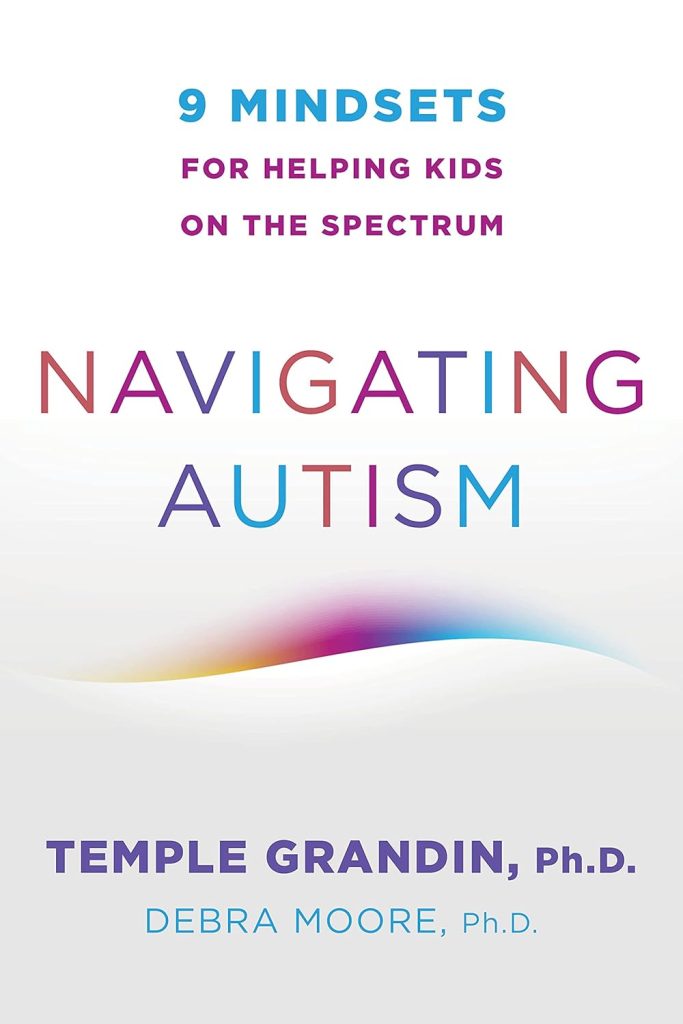
Temple Grandin’s book, Navigating Autism: 9 Mindsets for Helping Kids on the Spectrum
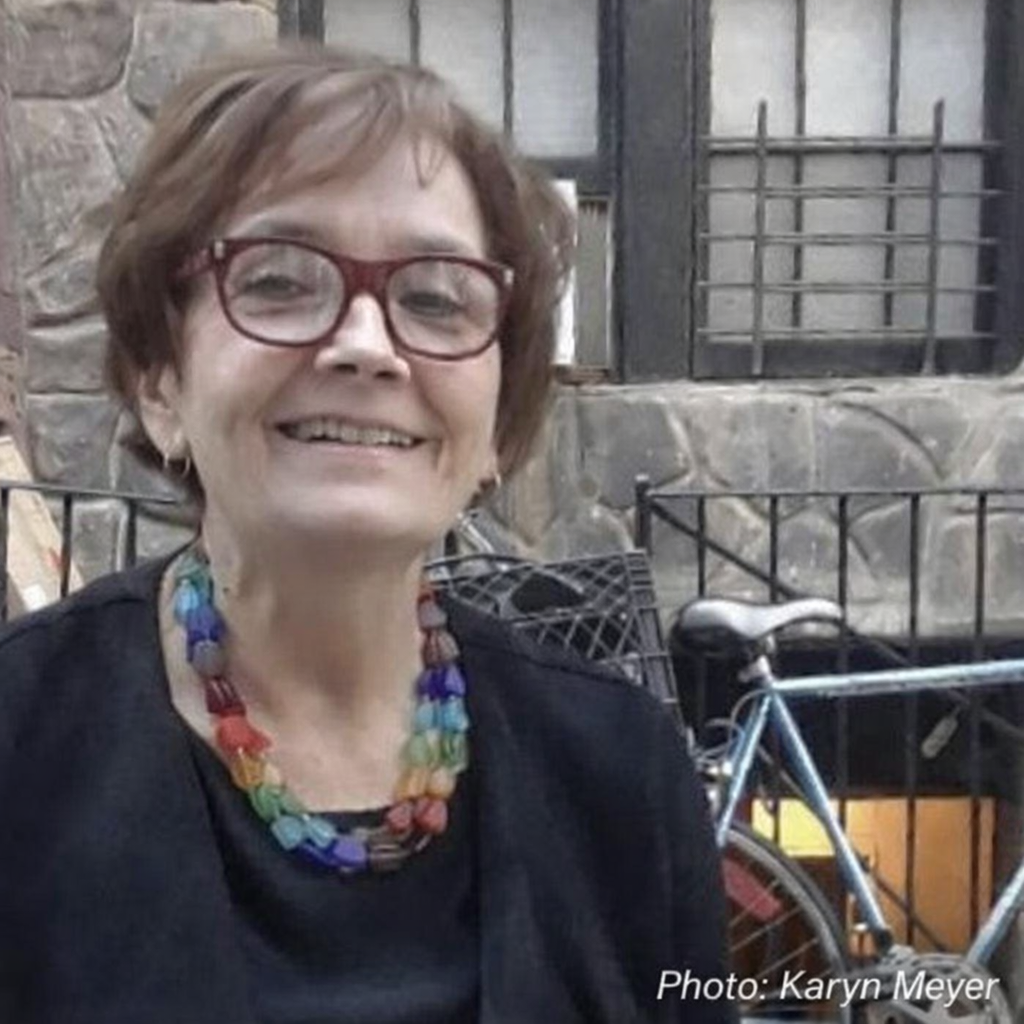
Patricia Lynne Duffy is the author of the now classic, Blue Cats and Chartreuse Kittens:
how synesthetes color their worlds, the first book by a synesthete about synesthesia. An audio version of the book with research updates, music by synesthete-composers, and an “Afterword” was recently released, available from Audible. Duffy also contributed a chapter, “Synesthesia and Literature” to the Oxford Handbook of Synesthesia. Duffy was selected for the “Davos Neurodiversity Summit Wall of Leadership” in both 2025 and 2026.
See Pat Duffy’s website, https://www.bluecatsandchartreusekittens.com/early-review-of-blue-cats-in-cerebrum